Fresh off the airplane from Boston, and back to the blog! This past week I had the pleasure of attending the Society for Historical Archaeology’s (SHA) 2020 Annual Meeting in Boston, MA. It was my first SHA conference, and definitely one of the largest conferences I’ve had the change to attend so far, and it was such a wonderful experience! Of course, we did some touristing while we were in town…and most of the talks I attended had everything to do with colonial burials & settlements!
This post is a digital summary version of a paper I’d written for a course during my masters, and later expanded on to present at the Transmortality conference in Luxembourg in 2017. I’m choosing to turn these ideas into a blog post, because I think it’s a rather interesting topic and I’d love to have a discussion with all of you about it! So let’s dive it, shall we?
By investigation the relationship between burial spaces and their communities, we can gain insight into the personal relationship between people and death. This post will explore interaction with burial spaces and the influence of these spaces on movement throughout history, from the 17th to the 21st centuries. I looked at Boston, MA and Guilford, CT as my case studies, through historic and modern accounts of being in the burial grounds, examining the multi-purpose use of many of these early Puritan sites.
The Guilford Green, Guilford, CT (Photo by author 2016).
Today I’d like to write a short post to tell you all about a few amazing instances of the pursuit of a ‘proper’ burial against all odds. Before starting, I would like to state that this is a proper burial through the lens of primarily white settler communities in the 19th and 20th centuries in what is now Canada. Thanks!
What denotes a good burial? It can be defined by a person’s social status, their religion, their personal beliefs and choices, fads of the time, and a number of other things. A proper, good burial in the medieval period included being close to the altar, in ancient Egypt it meant having belongings with you to help in the afterlife, for southern USA enslaved families it meant being able to bury their dead in peace on their own terms. For settler communities in Newfoundland and mainland Canada, it meant being able to follow their traditional burial practices of interment, regardless of the conditions.
A buck at Woodland Cemetery (photo by author 2019)
Hi all, can you believe it’s already nearly the middle of August? I can’t! It feels like just yesterday that I was starting my work at Woodland Cemetery. Tragically, that contract has ended, and I am working for another local historic cemetery for the next month or so, combing through their archival materials to create a book manuscript about the background of the site, their significant people and stories, and transcriptions of the gravestones themselves. Keep your eyes peeled, folks. It promises to be an interesting project!
My goodness, what a whirlwind these past 7 weeks have been! With only one week to go, I can’t believe I’m nearly finished with these weekly(ish) blog updates of my training and work as a gravestone conservator. Here we go people, I can fix gravestones and know more about stone than I did two months ago! Does anyone want me to talk about stones forever…because too late, I’m never going to stop!
It was an exciting and productive week at the cemetery, so lets dive in! It was only a four-day week because last Monday was Canada Day, so I’m pretty impressed with all the things we got done.
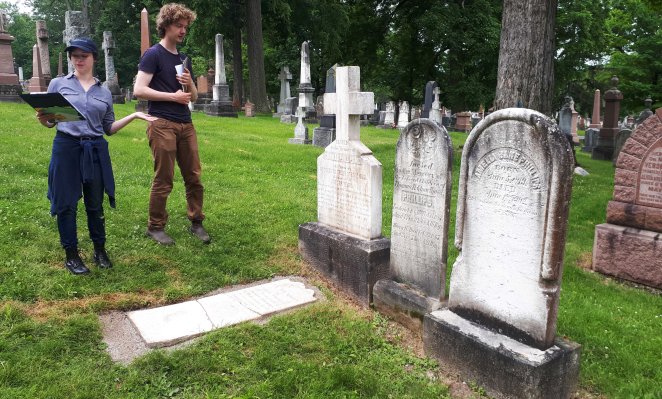
Meagan & Thomas, archivist/historians, preparing for the July 6 tours.
Hello all, welcome back to another ‘updates from the field’ style post, where I’d like to discuss what we got up to at the cemetery this week! It was an extremely busy week, and we got quite a lot accomplished, and learned a load of new skills throughout it all that I am very excited to use throughout this program and hopefully throughout my career as a historical archaeologist.
Little woodchuck friend coming to see why we were digging so many holes in their field!
If you are new to the study of burial markers and don’t come from a geologic background or have prior knowledge in basic geology, grasping the differences in materials found in burial grounds might seem like a monumental task! In this post, we will be discussing the composition and problems/perks of different stone types that are found across North American historical burial grounds, as well as common weathering issues that can be seen across these stones. I do my best to keep this post up to date as I learn more about the geologic processes at work in our historic cemeteries and graveyards.
(last update: December 4, 2023)
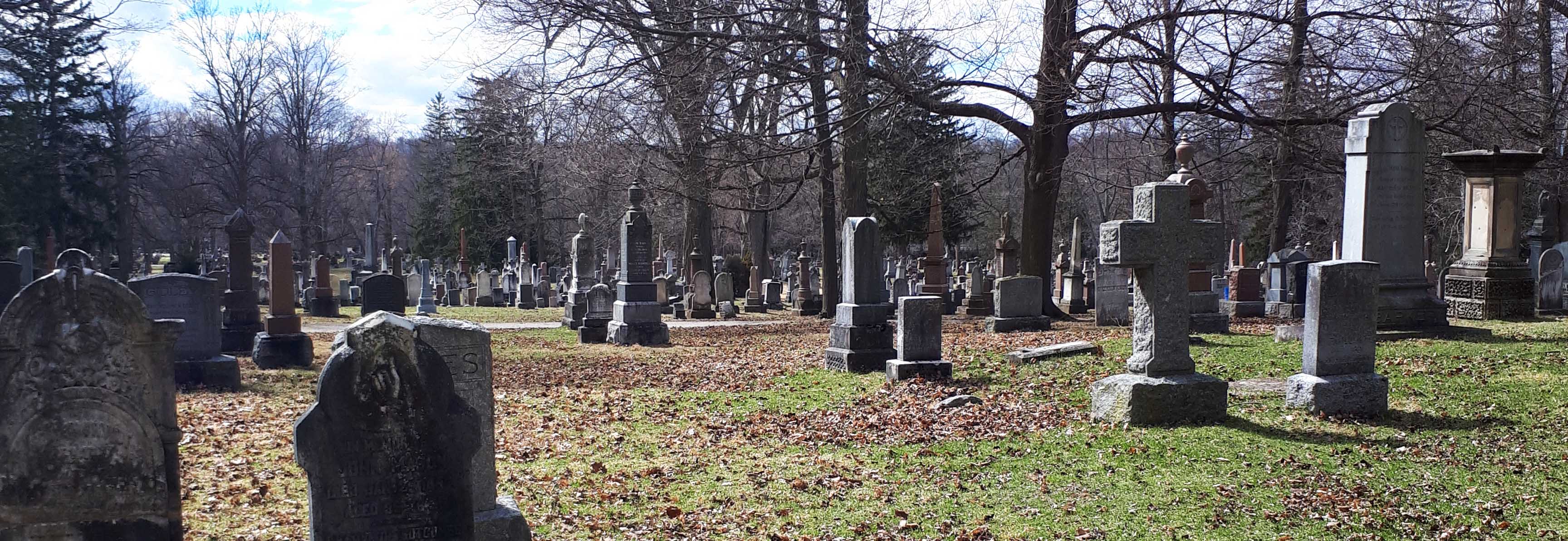
Woodland Cemetery, London. ON. (Photo by author 2019).
This site is near and dear to my little heart, perched on the hill west of the historic site of the Colony of Avalon at Ferryland, Newfoundland. It was one of the sites I explored during my MA thesis (see my publications for a link to the thesis, or wait a few months for the book!), and come to think of it I could very easily populate this series with all NL sites from my thesis research. Would anyone want to read that? Maybe?
Exposed to the often harsh and relentless winds of the North Atlantic ocean, anyone visiting graves in Ferryland in the 18th and 19th centuries would have had an unobstructed view of any passing ice bergs or whales!
View of the Colony of Avalon from the burial ground (photo by author 2015)
Update May 28, 2024: Hi there, if you’ve come to this website from an article denying the atrocities of the Canadian residential school systems, please know that my research does not agree with that idea at all. Through oral history and archaeological evidence, it is extremely obvious that numerous children were harmed, killed, and buried on the properties of residential schools. This post discusses the cultural concept of if a grave can ever be considered ‘no longer there’, and the overwhelming answer is no. So even if you think the decomposition of a body warrants the grave disappearing, the answer is no, no it does not. To believe that white settler graves are in perpetuity, and not Indigenous graves, is frankly racist.
This is a topic I’ve discussed with colleagues on several occasions, and most recently in a really engaging thread on twitter: When is a grave…no longer a grave? If ever, at what point might that happen? There isn’t one definitive answer to this question, and the understanding of a grave, its significance, and longevity are rooted in our backgrounds, cultures, and society. I’ve finally found some time to sit down and write up the results of the discussion, and share some thoughts with you all.
This is a particularly special site I’d like to discuss with you today: The Fairview Cemetery, near Oliver, BC. Fairview was a gold mining town in the South Okanagan-Similkameen, born out of the gold rush in the area in the late 1880s. Legend has it that gold was first discovered by a one-armed man in the 1860s, but no Europeans arrived to exploit the areas for gold until the 1880s. It was located just west of the modern-day town of Oliver, and some older homes in Oliver are said to have been built out of wood salvaged from the would-be ghost town.
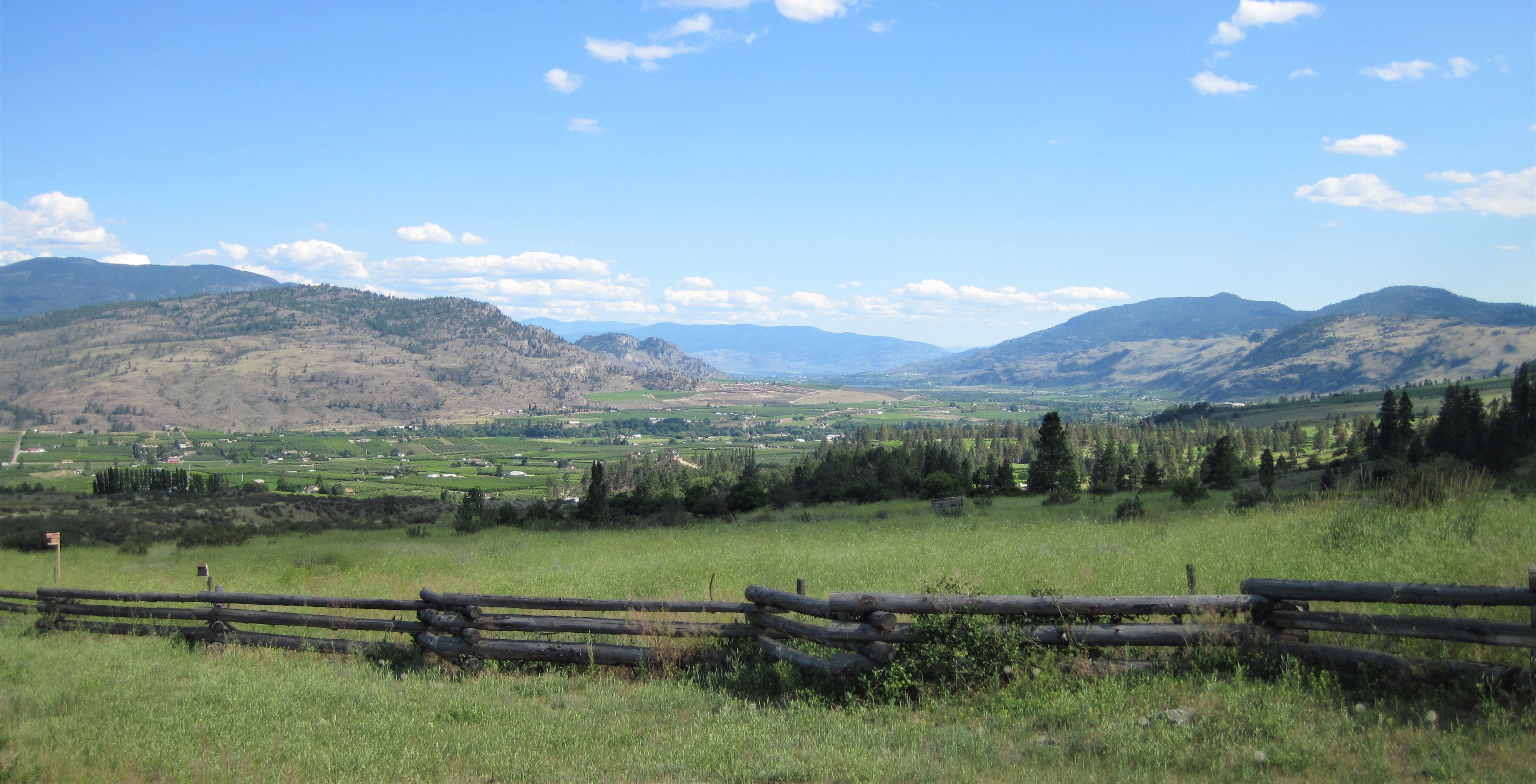
View from the Fairview townsite over the South Okanagan





 Spade & the Grave