Hi friends, it has been a minute since I’ve sat down to write anything on the blog! My last post was in May, and since then it has been a pretty busy summer with fieldwork, family visits, and a variety of trips! This winter, I’ll be updating our Black Cat fieldwork blog on some of the cool projects we’ve worked on, so keep an eye out for that HERE!
This August, we (my husband Ian and I) had the wonderful opportunity to travel to Utrecht to attend and present at the Association for the Study of Death and Society’s bi-annual conference, ‘Death, Dying, and Disposal 17’. Held in Utrecht and hosted by the Utrecht University, it looked like it was going to be a fantastic event, and my first DDD in person after presenting digitally a few years ago, so I was very excited. Of course, you can’t just fly all the way to Europe from Newfoundland and not add on a little holiday in there too, so we started off the trip in Paris! There were some excellent death studies related sites, so lets get into it.
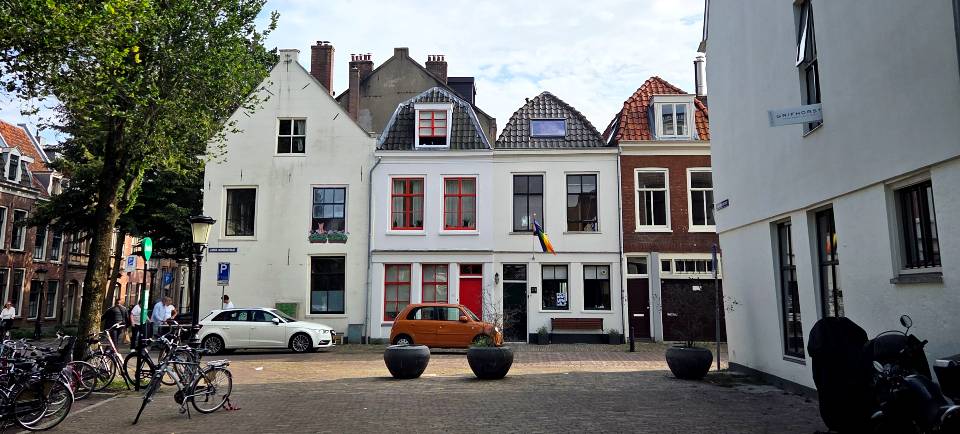
A city square, Utrecht, Netherlands (photo by author 2025)
I suppose I can’t start off every post by apologising for not writing forever, but it has been nearly 6 months so I suppose I’d better do it this time. Sorry, friends! Life has been going fast and I have a lot of projects on the go at the moment, both at work and on my own time, so writing a research blog for fun has been pushed to the side. However! I’m in the middle of writing my next book project, ‘A Graveyard Guide to Eastern Newfoundland’ (tentative title, does anyone have anything snappier??), and I got sucked into a research rabbit hole last night for several hours writing about a specific gravestone, so I wanted to share that excitement with everyone!
Harbour Main is a small outport community on the south coast of Conception Bay, Newfoundland and Labrador. It is well known for its gorgeous beach called ‘The Tide’, but it’s known mostly to me for being home to a small early cemetery that my friend Katie took me to see back in 2021. At this site, called The Old Irish Cemetery or the Old Irish Roman Catholic Cemetery, there are a number of field stones and other locally carved markers, but one in particular has stuck in my mind, because it’s inscribed in French.
View across the Old Irish Cemetery, Harbour Main in the fog (Lacy 2021).
If you haven’t heard of Loren Rhoads’ fantastic book ‘199 Cemeteries to See Before You Die’, then you’re missing out! Luckily, Loren has released an updated version! Black Dog & Leventhal Publishers kindly sent me a review copy, and I’ve had the best time checking out the new edition! You can purchase the book directly from the publisher by clicking HERE or by asking your local bookshop or wherever you buy books!
Loren Rhoads is an author and editor of numerous fiction and non-fiction books, and is a longtime cemetery history expert and enthusiast. She has served as a cemetery consultant for AAA, The Weather Channel, Mental Floss, and Atlas Obscura among many others, and currently resides in San Francisco, where there are no active cemeteries.
The gorgeous new book! Thank you Black Dog & Leventhal Publishers!
The book is a great guide to visiting cemeteries around the world, with tidbits about the history of the sites and the significant people who are buried there. Each site entry includes the location of the site, and a website about the site if it’s available. It’s such a great way to explore the history of a new place through the people who created it and the artworks they left behind!
The book covers sites primarily in the USA, with 101 sites introduced throughout the pages. There are 7 sites included in Canada, which was very exciting for me as a Canadian archaeologist! The first edition of this book only had 5, and it was great to see that expanded a bit more! The rest of the book is primarily divided up by region: Central and South America and the Caribbean, Europe, Eastern Europe, the Middle East, Africa, Asia, and Oceania. While the book clearly skews heavily towards American sites, this makes sense as both the publisher and author are based in the States.
I was really impressed with the breadth of sites that Loren covers throughout the book. For the Canadian sites, Saint Mark’s Churchyard in Niagara-on-the-Lake, ON and the Hunt Family Cemetery on Vancouver Island, BC were new additions. As a Canadian archaeologist and cemetery enthusiast, I was very excited to see this! Saint Mark’s Churchyard is a notable site, the final resting place of William Riley and John Waters, Black residents in the area, as well as the site of large trenches cut through the graveyard during the War of 1812. The Hunt Family Cemetery is located on the land of the Kwakwaka’wakw people of Vancouver Island, who occupied the region long before the arrival of European settlers, and occupied different areas based on the seasons. Their lives were permanently disrupted by the construction of a Hudson Bay fort, Fort Rupert, in 1851. The Europeans brought smallpox to the Indigenous people, and the fort was abandoned only a few decades later in 1882. The cemetery is located near the Kwakiuli Band Longhouse, where much of the art was carved by local Kwakwaka’wakw artist Calvin Hunt and other family members, to commemorate family buried there. I really appreciated Loren’s inclusion of an Indigenous site in the Canadian section, and her thoughtful discussion of the impact of colonialism and residential schools on the community.
Visually, I love the redesign of the new book! The original version was black, with gates opening into a mossy cemetery. Gold filigree decorates the top of the cover, and the exterior edges of each page inside. The new version is brighter, with a stunning southern cemetery with a large tree dripping in Spanish moss covering the entire cover, with a narrow white border around the edge. The filigree is removed from the interior pages, which I think makes the pages less busy. It draws your focus to the photos, I think it was a good choice. I’m of the mind that cemeteries aren’t always morbid or creepy, so I love a book about burial grounds that aren’t dark and gloomy looking.
‘222 Cemeteries to See Before You Die’ ends with the grave of author Robert Louis Stevenson, located in Samoa. The book covers all corners of the globe, introducing the reader to burial practices from numerous different cultures, and is a great introduction to regions you might not have already been familiar with as a burial ground enthusiast. Overall, this updated volume is absolutely wonderful, and would be a great addition to the bookshelves of any taphophiles or history fans in your lift! 10/10!
Hello readers! It has been a wild last few months with my defence, dissertation edits, submitting my final dissertation (convocation next month!) and a sprinkling of fieldwork. I’m excited to get back to a bit of writing on here, and bring you all some interesting mortuary archaeology pieces! Today, I’m excited to finally be sitting down to write a bit about our recent trip to Scotland with my parents, and all the amazing burial traditions we learned about while there.
We (my husband and I) travelled to Edinburgh to meet up with my parents, who had gone over a few days before us to explore the city. The joke for the entire trip was that we were only going to look at old stuff and birds, as a group of two archaeologists and two birders who also like history! And look at old stuff and birds we did! I also dragged everyone into every chambered burial cairn we came across, and we all brought headlamps on the trip for just that reason. It was amazing, lets get into it!
The Wideford Hill Chambered Cairn, Orkney (photo by author 2024)
This is just a short blog post to let all my readers know, in case you haven’t seen it on my social media yet, that on Wed, August 14th, I successfully defended my PhD Dissertation. Pass with minor corrections!
Let me reintroduce myself to you all, I’m Dr. Robyn Lacy, PhD in Archaeology!
Popped a bottle of Veuve Clicquot to celebrate right after my defence was over!
Of course, this was just the defence and I do have some corrections to make before officially submitting to my university for graduation, but when you pass your defence they call you ‘Doctor’ right away, so I’m rolling with it. I’m partway through the corrections at the moment, and if all goes well, I’ll get to convocate in October this year with my husband, parents, and best friend in the audience!
I wanted to write this short blog post to sort of go over the defence process (defense? writing it either way looks wrong at this point), now that I’m on the other side and it doesn’t look like quite as huge and scary of a monster. And because I’ve been away from my computer for a bit now and a blog post is a good way to get back into the writing mindset.
I completed the first draft of my dissertation in pieces, submitting each chapter to my supervisors as I went as early as February 2023. They sent them back with edits as I went as well, and I made changes. The full second draft was completed before Christmas 2023 I believe, and I sent it off for more edits before finishing my Hexfoil book edits and sending that manuscript back to my publisher as well. More edits came for the dissertation in the new year from my two supervisors (bless them for reading my behemoth of a dissertation so many times), and I got all those changes and tweeks done. Then we sent it off to my external supervisory committee member, and once their comments were back and changes were made, I officially submitted my dissertation for examination in May 2024. Date unknown, everything is a blue and my brain may have leaked out of my ears at this point.
In June I indexed my hexfoil book and approved copy edits, while waiting for examiners to be lined up, given my dissertation, and for a defence date to be set by the School of Graduate Studies. I’d heard horror stories about students having to organize their own defences, so I’m really glad that at this point, it was all out of my hands! Then I went on holiday with my husband and my parents around Shetland, Orkney, and the Highlands of Scotland for three weeks (blog posts to come!).
After we got back from holiday, there were a scant 1.5 weeks to go over my presentation and review my dissertation before it was time to defend! I rehearsed my presentation once a day, not on the weekend, leading up to my defence, and tried to make sure I was getting lots of good food and lots of sleep in the days leading up. I’m not someone who can cram work into the last minute, so I had my presentation 99% done before we left for Scotland, so I wouldn’t be stressing about it too much on our holiday.
I didn’t know who my examiners were going into the defence. Apparently some places they tell you that beforehand, but at MUNL it’s *meant* to be a secret. I was really excited to see some familiar faces examining my work, scholars’ whose work I really admire, which made me less nervous immediately. I was also so fortunate to have a bunch of friends and family who took time out of their day to watch my defence, and that was so special. I felt really supported, thank you everyone!! I signed onto my Webex defence at 1pm, and my presentation wouldn’t share! Great start! I could feel my eyes prickling a little with the frustration, and one of my examiners stepped in to suggest I log off, double check any settings, and log in again. That was a good chance to take a few deep breaths, and when I logged in again it was working fine! Phew.
Post defence! Hurray!
My presentation was about 25 minutes (it had to be under 30), and then the examiners each got time to ask me questions in two rounds, with a 15 minute break between them where I ran to the washroom and then paced around my house nervously. The entire thing took 2.5 hrs, and my cats were not impressed to be locked out of the office. Guests were all kicked off before the deliberation, and I was put into a breakout room to wait. I had time to stand up and leave the room for about a minute, and then they called me back and told me “Well, that was a short deliberation! Congratulations, Dr. Lacy!”
There was a bunch of grinning, lots of thank yous, we took a screenshot with the examination committee which I’d love to get set to me by whomever took it, and then it was over! The second I exited the meeting, I burst into tears! What a ridiculously huge milestone, and two weeks later as I’m writing this, it still doesn’t really feel real! I’m in the middle of my minor revisions at the moment, and once those are finished I’ll be able to apply for convocation this fall, but the huge step is really the defence.
The best advice I got before my defence was the same as my comps, once you are in that room, you’re the expert on your topic and for the most part the questions people are going to ask you are out of interest. They are not trying to trip you up or humiliate you. I got a fair amount of questions about my literal writing style which I wasn’t expected at all, but overall the questions were really interesting, and I took a bunch of notes to apply to my final revisions now that everything is finished. It was overall less stressful than I was expecting, while also being the most stressful thing at the same time, but now it’s done!
Hello friends, its been a minute! Since I last wrote a blog post, we’ve done some fieldwork, I’ve finished my dissertation edits and sent it off for review, and we went on a 3-week holiday with my parents around the Highlands and Islands of Scotland. More on that later, I have a whole slew of blog posts planned for the next few months! But first, a play review!
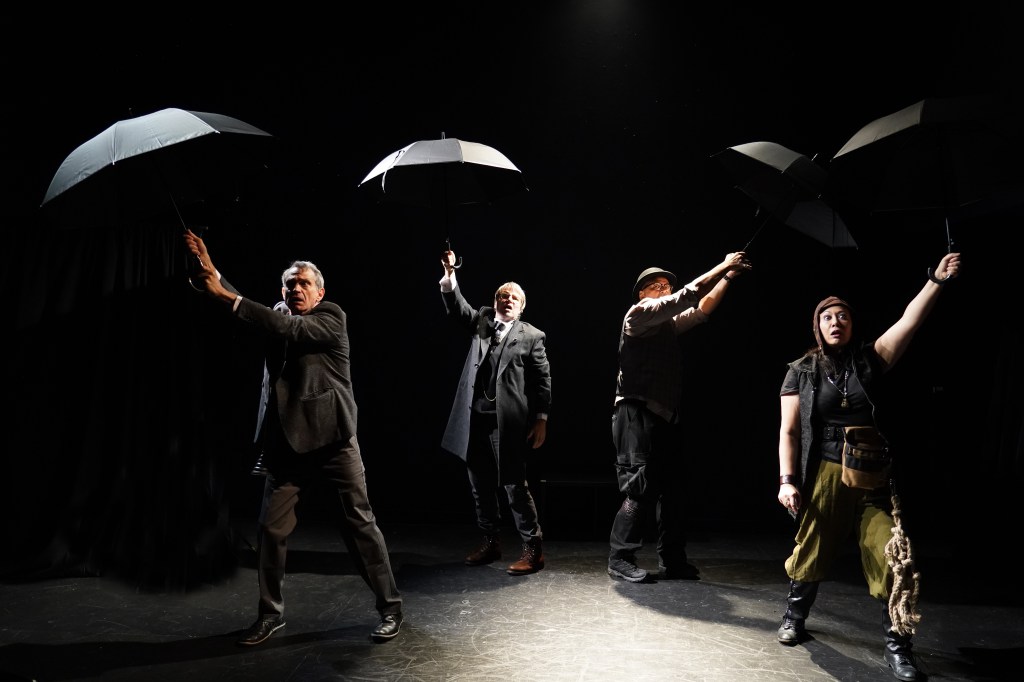
I was contacted recently about doing a review of the play ‘Plotters’, which is on right now at Edinburgh Fringe! ” The dark world of 19th-century grave-robbing has inspired Plotters, a fast-paced comedy that makes its world premiere at this summer’s Fringe Festival” was certainly an enticing byline describing the show, and I was excited to check it out! The team was kind enough to send me an early recording to view, since I was not able to stay in Scotland for Fringe.
Friends, we have an issue. Over the last several weeks, my website has been linked by several websites in Canada that are denying the atrocities committed at the residential schools across the countries. I will not link those sites here. They are trying to use my work to bolster their argument there are no ‘lost children’ from Indigenous families, that children were not mistreated, killed, and buried in secret.
These are facts we know from testimonies, records, and the results of countless archaeological investigations across Canada in recent years. You do not need to put a shovel in the ground to see the burials.
The post they are all citing is this one, “When is a grave no longer a grave?“, which I published on Feb 27, 2019. What I was discussing in the post was whether there was or could be a point that a grave is no longer considered to ‘be there’, which is absolutely up to the cultural groups to which the graves belong. Overall, folks I polled on twitter indicated that they believed that a grave is always a grave, regardless of if the state of decomposition. I agree. A burial is a burial in our (settler Canadian) culture, and even cenotaph sites where no body has ever been buried are revered with the same respect as burials. Do those Indigenous children not deserve the same care and respect?
If you found my work through one of these websites and agree with what they are saying, kindly do not come back.
Hi readers, it’s time for a quick update about my PhD and recent travels to British Columbia. As of right now, April 27th, 2024, my brain has turned to mush after completing all the dissertation edits from my two supervisors! I’m currently waiting for a few more comments back from my external supervisor, and once I do those my dissertation will be off to examination! If all goes well, I should be defending sometime this summer, hopefully sooner than later. I can’t believe how quickly my PhD program has flown by!
After completing the majority of the edits, I headed out to BC to visit my parents, Grandpa, and best friend Kelsey! A much needed visit to the Okanagan, and a huge different in weather and abundance of flowers from Newfoundland. Because I flew out early in the morning, it was daylight flying over the rockies, and I spent that last part of the flight with the flight map up so I could identify lakes in the Kootenays as we flew over.
Hello friends, thanks for joining me again! I haven’t had too much time to write fun blog posts recently, as I’ve been working super hard trying to get all the edits completed on my dissertation! I’ve got some fun travel coming up this year though, so I’m hoping to plan some posts around that! Today’s post isn’t about travel or fieldwork though…it’s another publication announcement!
Yesterday, I met with Boulder Books to go over and sign my book contract to write a guidebook to cemeteries and burial sites in eastern Newfoundland. I’m so excited! Boulder is an amazing local publisher here in Newfoundland and Labrador who publishes amazing local guides, memoirs, cookbooks (the Grounds, anyone??), history, and more, and I feel super lucky that they had heard of my work with cemeteries around the province and were interested in going into this project together.
Goats (and a sheep) of New Perlican, at St. Augustine Cemetery #1 (photo by author 2022). Continue reading →
Exciting news, friends! I’m pleased to announce the release of my second book, “Daisy Wheel, Hexfoil, Hexafoil, Rosette: Protective Marks in Gravestone Art“, with Berghahn Books! It’s now available for pre-order, with publication in September 2024!
Pre-orders are now available through Berghahn’s website, click the link HERE to check it out! Just like with novels if you follow any authors online, you’ll know that pre-ordering a book is really important if you want to support that author because it lets the publisher know that there are people out there excited for the release and gives them an idea of demand and of the book’s success. You can also support the book (and me) by requesting that your library order a copy!
The cover of my upcoming book, provided by my editor at Berghahn Book!
A huge thank you to my editor, Caryn Berg, for reading my abstract for the 2020 SHA conference talks and reaching out to me with this project idea. I have been so thrilled to turn what has really been a huge interest for many years into something more tangible, and to have the opportunity to explore it in depth. Protective marks, aka apotropaic marks, can be found throughout many parts of the world, from Rome to Egypt, and England to North America and Australia. They were likely used to provide protection, like a lucky charm might, and can be found everywhere from churches to homes, to gravestones. The purpose of this book was to explore their use in a mortuary context throughout history, with a survey of colonial gravestones in North America that constitutes the first study of its kind of these symbols. It has been noted in gravestone research for decades that hexfoils and whorls are present in gravestone art, with a nod towards their apotropaic history, especially in the UK, but no further work had been carried out, and I hope with this volume that I’ve added a little to that conversation!





 Spade & the Grave