Spade & the Grave

death and burial through an archaeological lens


Leave a comment

Billboard Monuments – Unique Gravestones at the Old Parish Burying Ground, Windsor, NS

If you read my last post, then you know there are some interesting things going on at the Old Parish Burying Ground in Windsor, Nova Scotia. Among the not so ideal stone repairs, there are some spectacular gravestones at that site and I highly recommend you check it out if you’re in the area! There is work by ‘JW’ who signed their initials bigger than the name of the person dedicated on the gravestones, and some earlier sandstone markers from the 18th century with classic memento mori imagery including skulls, bones, and hour glasses. Your time is fleeting, etc!

The monuments I want to write about today though are unlike anything I’d ever seen before! When we rolled up to the burial ground and saw them, my first thought was that we were witnessing the world’s weirdest gravestone repair, somehow broken off halfway up and mounted high over the grass on posts…but then we took a closer look…

Continue reading →

3 Comments

Old Parish Burying Ground – Conservation Concerns

This past weekend, myself and my husband traveled over to Windsor, Nova Scotia, to visit our friends and tour around a couple of the local burial grounds…because what else would we be doing on the weekend? We’d been informed that some conservation efforts had been undertaken at the oldest site in the town, the Old Parish Burying Ground, and based on the photos there was some concern over how that conservation had been carried out. So we wanted to document what we could, and see the amazing gravestones as well (There will be a follow up post on what we found, because it’s very exciting!).

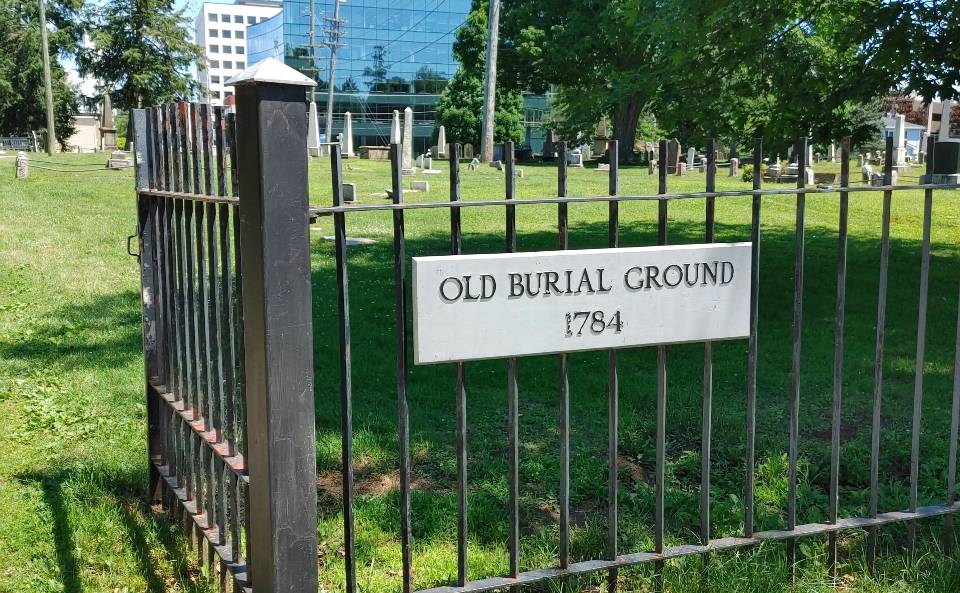
The Old Parish Burying Ground was opened in 1776 according to the sign at the front of the site. The Canada’s Historic Places page (Click HERE) gives some confusing dates and, I think, a typo at the beginning of the page claiming the land was given to the church in 1779, but lists the opening date as 1776. It was the site of the first Anglican Church in Windsor, but the site itself was not consecrated until 1826, by Right Reverend John Inglis. This was a common occurrence in Newfoundland and Labrador, when Bishop Inglis would travel to outports for services and consecration of sites. His name appears a lot in records of NL burial sites, so it was very familiar to come across his name here too!

Content warning: Upsetting gravestone repairs using incompatible materials

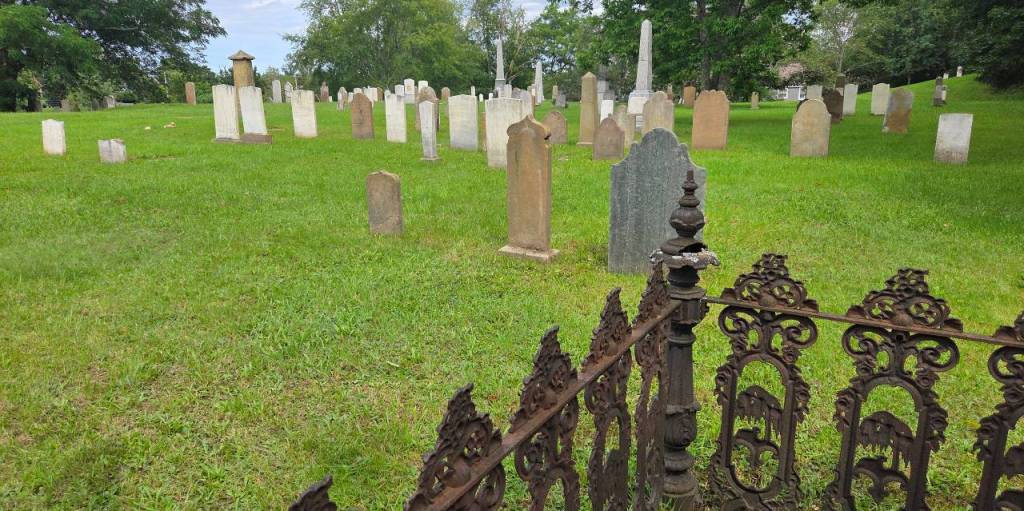
View of the Old Parish Burying Ground from within a plot surrounded by cast iron fencing (Lacy 2026).
Continue reading →


Leave a comment

The Unique Epitaph of Harry Bernard Russell

While working on my guidebook project (it’s with designers now, coming to a book store near you soon!) this week, I re-found the very interesting gravestone of Mr. Harry Bernard Russell, and wanted to share his story. In 2023, my husband and I worked on a collection of gravestones at Coley’s Point’s St. John the Evangelist’s Church and churchyard, near Bay Roberts, in Newfoundland. This was part of a three-phase project at this site in collaboration with the parish, which was a great experience. I wrote about the site in my guidebook, if you want to learn more! We’re just going to talk about Harry today though!

This is the gravestone of Harry Bernard Russell. His gravestone was likely carved in St. John’s, and had broken at some point in the past. In the ‘before’ photos, you can see the holes from a pin repair, and a fairly adhesive that we had to remove. Unfortunately, this old adhesive dyed part of the marble blue, and I’m really hoping the cleaning treatment does help lift that stain, but only time will tell there! The stone was also set in concrete into the base at some point, not by us! I do not recommend anyone set gravestones into concrete (or even on historic buildings, but we can talk about that later). We carefully removed the old adhesive, and as much of the flaking white paint as possible, before resetting the break using a stone conservation epoxy, cleaning with D2 and water, and filling any spaces in the break using a fine lime mortar. This work was done at the request of the parish, and we are archaeologists who can hold permits to work at these historic sites, so please do not go out and try to fix gravestones on a whim!

Continue reading →


11 Comments

The Old Burial Ground, Fredericton, NB

This is an exciting post, friends! As you may or may not have seen on the news this summer(maybe only if you live in the Atlantic provinces in Canada), I have been working with the City of Fredericton as a consultant on the Old Burial Ground in the heart of Fredericton, since August 2020. The City is working on the long-term restoration and preservation of the historic burial site, and this involves exploring the gravestones housed on the grounds and what can be done to help them last a little while longer.

That is where I came in!

Gates to the Old Burial Ground, downtown Fredericton, NB (Photo by author 2021)
Continue reading →


5 Comments

Gravestone Bases: Conservation & Sinking Stones

“Creative” writing is a good break from comps writing, right? Right. This might not be creative writing, but it’s a good flow to get those typing juices flowing while still keeping my head in the game! What is the game, you might ask? It’s gravestones. It’s always gravestones.

Today I wanted to chat to you all today about the construction of historic gravestones below the ground, getting to my archaeological roots subsurface, and how historical gravestone construction methods differ from what we see today, aka too much or too little. Let’s dig in! (hah)

St. John the Evangelist Church, Coley’s Point, NL (photo by author 2021)
Continue reading →


Leave a comment

Gravestone Conservation & Social Media: Benefits and Challenges of the Online Dissemination of Gravestone Cleaning

Hi everyone, this is a blog post version of the talk I gave at the Death, Dying, & Disposal 15 conference this past week (#DDD15). It was my very first DDD conference, and while digital, I was very excited to attend! Digital conferences are exhausting and maybe not as easy for networking or getting together in the ways that traditional in person conferences have been, but they really open attendance doors for people who might not be able to travel around the world for talks every year! I presented from St. John’s, Newfoundland and Labrador, Canada, on the traditional territory of the Beothuk and Mi’kmaq people, and acknowledge their ownership of the land and my place here as a settler.

My talk was titled “Gravestone Conservation & Social Media: Benefits and Challenges of the Online Dissemination of Gravestone Cleaning”. If you know of any other examples of gravestone cleaning online that you’d like to share with me, I’d love to see them!

Continue reading →


2 Comments

When Repairs Fail: Maurice Baker’s Gravestone

An unfortunate part of gravestone conservation and care is that sometimes it doesn’t always stand the test of time. This could be because the repair wasn’t strong enough, or the stone had been disturbed in some way after the repair took place. Perhaps it was bumped by a deer or a lawnmower, or someone leaned on the stone, or the ground shifted and gravity took over. Regardless of the reason, we can learn a lot about conservation and repair when the stone falls, and learn from the experience.

Today I want to talk about the repair and fall of one of the largest simple gravestones I’ve ever seen, that of Maurice Baker at Woodland Cemetery, London, Ontario.

Continue reading →


Leave a comment

CBC Article: This archeologist has made it her life’s work to preserve decaying history in N.L.’s cemeteries

A handful of weeks ago, before the latest alert level 5 lockdown here in Newfoundland, I had the opportunity to meet with CBC contributor Andie Bulman to discuss my PhD research and our new little business, Black Cat Cemetery Preservation. It was wonderful to chat with her, and as any research knows, I loved the opportunity to talk about my research!

The article, which opens with an image of me working at Woodland Cemetery in London, Ontario in 2019, discusses my PhD research on burial grounds, concerns with gravestone conservation, and what we hope to accomplish with our (mine and my husband Ian’s) business. It’s a wonderful platform that I am so grateful to have, and I hope the message gets spread far and wide!

Continue reading →


Leave a comment

“Discussing Gravestone Conservation Digitally: Disseminating Data & Advice through Blogging & Social Media” #DigiDeath Online Conference

A photo of me in 2019, working at Brickstreet Cemetery, London, ON.

Today’s post is an extended version of the presentation I gave on twitter on January 27th, 2021, for the University of Chester Archaeology Student conference, ‘DigiDeath’. A thank you to the conference & Prof. Howard Williams for the invitation to present on my public archaeology work online. Without further adieu, my presentation! This presentation was done on twitter, so the formatting will reference that format.

Abstract: This presentation will discuss the benefits and pitfalls of utilizing digital means, such as twitter, facebook, and blogs, to disseminate gravestone documentation and conservation information. As a heritage professional and historic archaeologist, my research discussions online often brings me into direct contact with the public, volunteers who provide the majority of the restoration of historic burial grounds. I will discuss how we can utilize these channels to ensure up-to-date conservation techniques are making it to these groups, and how we can all benefit from a digital communication for conservation.

Continue reading →


2 Comments

Curious Canadian Cemeteries: Castleton Cemetery, ON

Hello dear readers, it has been a while since I have written an entry for ‘Curious Canadian Cemeteries’! Today, I’d like to discuss the Castleton Cemetery in eastern Ontario, which I visited while on a camping weekend away. This site was opened in 1828and has been in continuous use for nearly 200 years. The site features many unique gravestones and examples of conservation and restoration that I’m excited to discuss with you all.

The site is located on the traditional territories of the Haudenosaunee, Anishinabewaki, and Mississauga Indigenous peoples (Native Lands 2020). All images in this post were taken by me on November 14th, 2020.

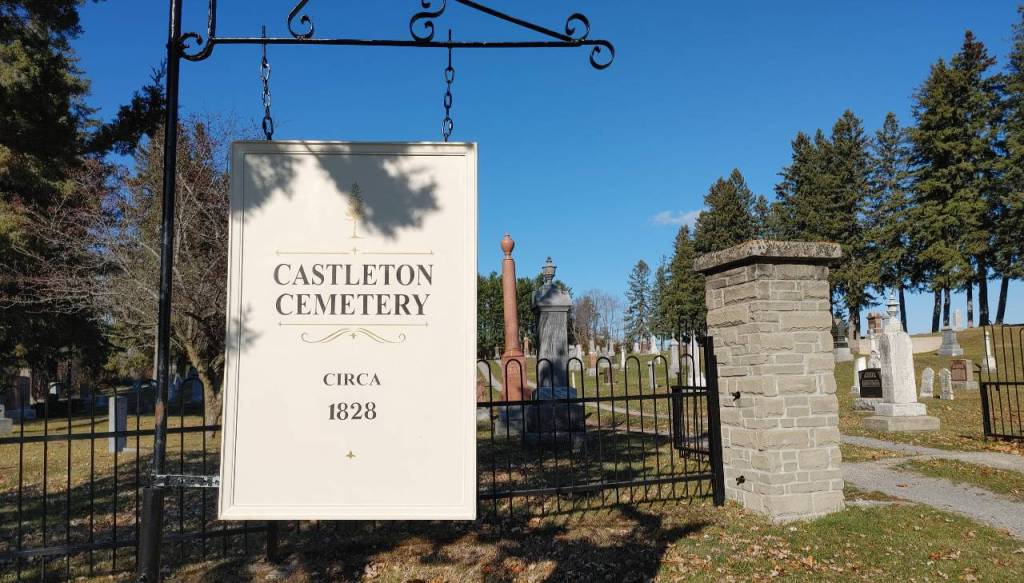
Sign at the entrance to the cemetery.
Continue reading →