Hello burial team, it’s finally time for another addition of Curious Canadian Cemeteries! This week we are looking at the Rockwood Cemetery, in the settlement of Rockwood, Township of Guelph/Eramosa, Wellington County, Ontario. This is my first ‘close-to-me’ cemetery that I’ll be covering!
I’ve talked about Rockwood before on this blog, when I posted about John Harris, my great x4 grandfather, who helped found the current settlement of Rockwood, and Thomas Harris, my great x3 grandfather who constructed Harris Woolen Mill with his brother and brother-in-law. The Mill is still present today by the Eramosa River as a ruin that can be visited and explored! Those very same relatives were buried in the the Rockwood Cemetery.
The sign & chapel at the Rockwood Cemetery (photo by author, 2018)
If you’re following my research because you’re extra-interested in death and dying, there is a good chance that you already know about the Order of the Good Death. The Order is an organization founded by funeral director and death positive advocate Caitlin Doughty, and directed by curator Sarah Chavez. It advocates for education and discussion on death and dying, that speaking/working in/researching these subjects is not morbid, and that burials should be moving towards an environmentally conscious set of practices (among many other things!).
The Order hosts this annual, sort of a cross between a conference and a public event, with talks, tours, artists, ad all manner of people who work / study / have an interest in death, called the Death Salon. The last few years I’ve really wanted to attend the event, mostly out of curiosity of what was going on, but they have always been far away from where ever I was living at the time (ie. last year I was in YYT and the Death Salon was in Seattle!).
This year Death Salon is in Boston, MA! The event will be taking place from: September 28th – 30th, 2018, at Mount Auburn Cemetery.
We’re heading back west for this week’s Curious Canadian Cemeteries installment (ok I know its been a few weeks, but there is work to do and papers to write!), lets take a look at the famous (and rather large) Union Cemetery in Calgary, Alberta.
Funeral procession at Union Cemetery, Calgary, 1911. (Glenbow Archives, NA-2315-6)
I’ve been living in Ontario for a few months now, but in just a couple of days it will finally be time to complete the second half of the move (i.e. moving the rest of the stuff, the car, and my partner). It’s crazy to think that we are going to be leaving the island so soon, but we will definitely be back for loads of visits.
I thought what better way to kick off part 2 of our move…and part 2 of the Curious Canadian Cemeteries Series, than with a site in St. John’s that I have visited on multiple occasions, and even wrote a paper on: The Belvedere Roman Catholic Cemetery.
Yes, that is a tiny out-of-context stone sheep relaxing in the grass.
Hello there, death and burial aficionados! I come to you today with a new series that I’m starting on Spade & the Grave called ‘Curious Canadian Cemeteries’ (cemeteries because it works for the 3 C’s, not because I totally agree with the term for all sites). Recently, I’ve noticed that a lot of publications that talk about burial sites around the world tend to gloss over Canadian sites, and I’d love to bring a few of the amazing burial grounds across the country into a bit of the spotlight! So if you have any interesting suggestions, I’d love to hear them! I’m going to try to make this either a weekly or bi-weekly feature on the blog, amidst other posts as I think of them.
Burial grounds, graveyards, cemeteries…whatever the terminology is for the site, every one holds a unique history and place within the landscape. While large, famous sites like Mount Auburn Cemetery or the Granary in Boston see visitors every day due to their publicity (and amazing monuments), there are hundreds of smaller burial grounds across North America and the world, that have just as rich of a back story, but might not be quite so obvious to the burial ground visitor on the go. Sites like these were meant to be visited, cared for, and enjoyed. They were created for the living just as much as the dead, and visiting historical burial grounds isn’t morbid. So without further adieu, lets virtually visit some unique burial grounds, from across Canada!
For my first post in the series, I wanted to feature a graveyard from one of my childhood homes, and the place that I lived in for the longest:
Penticton, British Columbia.
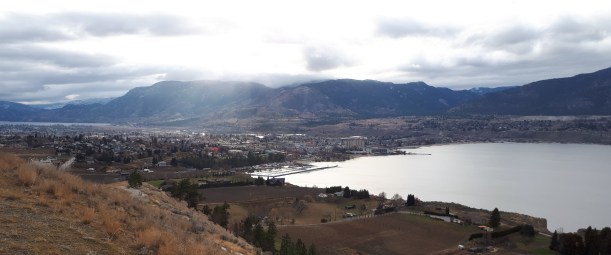
Penticton, BC, viewed from Munson Mountain (photo by author 2018)
Dead house in Nain, Labrador (Jarvis 1995. From the Memorial University of Newfoundland-Intangible Cultural Heritage Inventory
Welcome back, dear readers, to another installment of a blog about burial practices and archaeology! Today I’d like to talk about something that is close to by heart (as the result of arguing about it during my thesis): What did people do with their dead bodies during the winter, in colonial Canada?! Well, there are a few options to discuss but the short answer is…
Complex monument in North Wales (photo by author, 2012)
Hello readers, many of you are being directed here via the Heritage NL gravestone conservation tips and/or by Dale Jarvis! I originally wrote this post in 2017, and have since moved back to Newfoundland and have started my PhD in Archaeology (fall 2020). I have been working in heritage for nearly a decade, and specialise in burial ground archaeology and gravestone conservation. Last summer (2019) I had the pleasure of working full time as a gravestone conservator at Woodland Cemetery in the City of London, Ontario, and have since worked with Brick Street Cemetery in London, and on some other conservation projects as a heritage consultant in the Maritimes. I have given talks on gravestone preservation best practices to a number of organisations over the last year or two, and would have happy to answer any questions you many have about a site in your area. Please contact me through my website, or at blackcatpreservation (at) gmail.com. As an archaeologist with experience and graduate degrees in Newfoundland and Labrador, I am able to be a permit holder for archaeological projects such as burial ground projects.
The purpose of this post if to inform volunteers and communities groups who are invested in the care of their local historic burial sites of the current best practices in gravestone and burial site conservation. We all know that burial sites are a vital historic resource for learning about our communities, as well as the resting places of our families and friends, and they deserve to be cared for and conserved as best we can. As an archaeologist and burial ground specialist, I hope to help you do that, and it is my goal to make the conservation techniques for ‘Do No Harm’ care as widely available as possible.
Note: I am speaking only of the conservation and archaeology of settler burial grounds, as a settler in Canada. Work with Indigenous communities in their burial spaces is another topic entirely and should never be undertaken without the express wishes and blessing of an Indigenous community.
Myself, mapping away on our plan of St. Mark’s! Photo by Ian Petty
Yesterday I headed back to New Perlican with Ian Petty (2nd year MA student in Archaeology at MUN) to meet up with Dr. Shannon Lewis-Simpson from Memorial University of Newfoundland in order to continue with the surveying of the St. Mark’s historic burial ground. The weather was not ideal and I was hard-pressed to remember if we’d used a plastic drafting film or normal paper to draw the map on in the first place, so with rain in the forecast our fingers were crossed!
I wanted to go get as much of the burial ground mapped as possible before the rain set in…and before I had to start my new job! There will be more details on that major life change later though, this post is still about the burial ground in New Perlican. Continue reading →
This Saturday I was invited to speak at and participate in a community heritage & folklore event in the town of New Perlican, Newfoundland. New Perlican is located on the eastern coast of the Avalon Peninsula, and has dated back to the 17th-century through records such as the 1675 Berry Census and archaeological evidence of a ‘plantation’ in the area. It is suspected that several of John Guy’s settlers from the 1610 Cupid’s Plantation may have settled in New Perlican in the early 17th century, but there has yet to be any physical evidence of that move identified.
The event I was involved with was a collaboration between the Heritage Foundation of Newfoundland and Labrador, Memorial University of Newfoundland, and Heritage New Perlican, and involved something really that I’m pretty passionate about…burial grounds! Students and community volunteers would join us for the day to learn about the history burial places in this historic town, hear about the town’s history from members of the Heritage group, meet the cemetery cleaning ‘Goats of New Perlican’, and help the community clean up one of their most historic burial spaces. I was there as an additional help supervising the students, to answer questions on burials and gravestones (and have some awesome conversations about headstone preservation with local folks!), and to give a talk about my research as a historic mortuary archaeologist. Also, to map a bunch of gravestones! Continue reading →
First of all, I’d like to start by acknowledging that my last post was two weeks ago and my reason for not posting more frequently is: a) the job hunt, and b) I have been madly finishing a paper and my thesis..which was submitted yesterday officially! Yay!
I thought it would be nice, and relevant to do a post today discussing terminology for burial spaces and monuments. The terms I’d like to go over have some history to them of course, but like anything, they can take on different meaning depending on who is using them and where they are in the world. For the purposes of this discussion, I’m looking exclusively at colonial North America because that is my current study area, and dealing with basically only British/Irish, Christian (Catholic/Anglican/Quaker/Puritan,etc) burial spaces at this point. (I’m looking forward to seeing how these change as I go back in time a bit for PhD research in a few years)
Hartford, CT burial ground, facing the later-added church. Photo by author, 2015




 Spade & the Grave