In my last post, I mentioned the ‘London Marble and Granite Company Limited’, which was originally founded by J.R. Peel, a renowned artist and gravestone carver. Today I’d like to talk a little more about about Peel, his shop, and the idea of death within the built landscape and our cultural heritage.
If you haven’t heard of John Robert Peel before, let us review. An artist, Peel was born in England in 1830, and married Amelia Margaret Hall in 1849. The couple relocated to London, Ontario in 1852. Peel became an art teacher, highly involved in the growing city’s art scene, and eventually carved gravestones! John and Amelia had several children, including Paul Peel and Mildred Peel, both noted Canadian artists.
If you’ve been following my work for a little while you’ll know that I like to chronicle my fieldwork experiences when possible! I’m just here assuming that everyone is enjoying these, because there are 4 more weeks to go!
I can’t believe that it has already been 4 weeks, and that this experience is already halfway finished! I’m going to take what I’ve learned at the cemetery with me as I continue my burial ground research and work in the future.
Update May 28, 2024: Hi there, if you’ve come to this website from an article denying the atrocities of the Canadian residential school systems, please know that my research does not agree with that idea at all. Through oral history and archaeological evidence, it is extremely obvious that numerous children were harmed, killed, and buried on the properties of residential schools. This post discusses the cultural concept of if a grave can ever be considered ‘no longer there’, and the overwhelming answer is no. So even if you think the decomposition of a body warrants the grave disappearing, the answer is no, no it does not. To believe that white settler graves are in perpetuity, and not Indigenous graves, is frankly racist.
This is a topic I’ve discussed with colleagues on several occasions, and most recently in a really engaging thread on twitter: When is a grave…no longer a grave? If ever, at what point might that happen? There isn’t one definitive answer to this question, and the understanding of a grave, its significance, and longevity are rooted in our backgrounds, cultures, and society. I’ve finally found some time to sit down and write up the results of the discussion, and share some thoughts with you all.
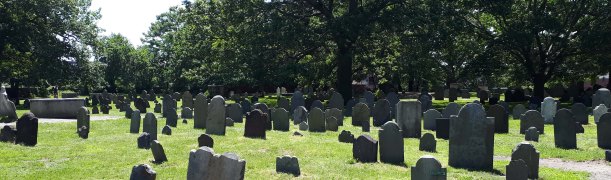
I recently had the pleasure of visiting some of the historic burial grounds in Salem, Massachusetts during my recently holiday to the area. I was particularly excited to visit Salem because it was not only an important site in the history of colonial New England, but it was a part of the survey I did of settlements for my MA research so getting to see it in person was a real treat! I decided to use the opportunity as a case study to investigate a particularly popular gravestone design. Continue reading →
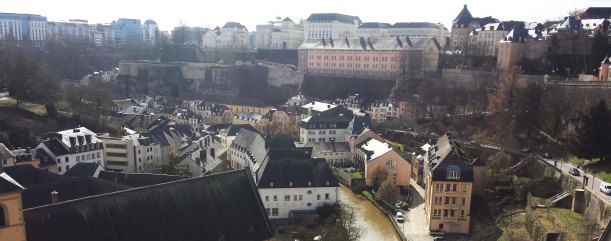
I recently had the honour of presenting some of my research at the Transmortality Conference in Luxembourg City, Luxembourg. The conference dealt with the themes of materiality and spatiality of death and dying historically and in modernity, and as my research mainly deals with spatial aspects of burial landscapes, I was beyond excited to attend and present at the conference, and chat with like-minded researchers from all over the world!
The Transmortality project is being conducted by Université du Luxembourg, and if you’re interested in their work, there will be a special issue of the journal Mortality coming out on the theme in 2019. More information on the project can be found here: https://transmortality.uni.lu/ Continue reading →
Last week was hectic, hence the lack of posts (sorry everyone!) but I promise my absence will lead to some really interesting posts in the next week or so that I’m really excited to share as soon as I can! In the mean time, I thought I would do a slightly less academic post on this fine Saturday evening and talk about some death / burial / mortality books that I’ve been enjoying lately, or obsessing over and recommending to everyone who comes near me over the last few weeks.
That title should also have the word ‘mortuary’ in it somewhere, but you probably guessed that’s where I’m going with this! Today I wanted to talk about above-ground material culture relating to historic burials. More specifically, about the classic gravestones of colonial New England and symbology that appears with some regularity throughout the region that display an iteration of several compass-drawn symbol often found in medieval churches and on items of furniture in the British Isles.
‘Ye Antientist Burial Ground’, 1652~, New London, Connecticut. Photo by author, 2015



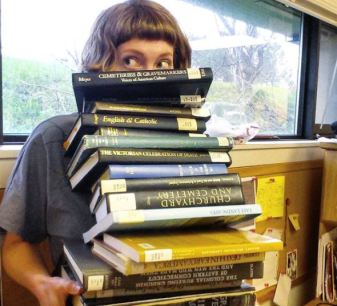 Last week was hectic, hence the lack of posts (sorry everyone!) but I promise my absence will lead to some really interesting posts in the next week or so that I’m really excited to share as soon as I can! In the mean time, I thought I would do a slightly less academic post on this fine Saturday evening and talk about some death / burial / mortality books that I’ve been enjoying lately, or obsessing over and recommending to everyone who comes near me over the last few weeks.

 Spade & the Grave