Spade & the Grave

death and burial through an archaeological lens


Leave a comment

Archaeology of Death: Student Blog Post Mini-Series

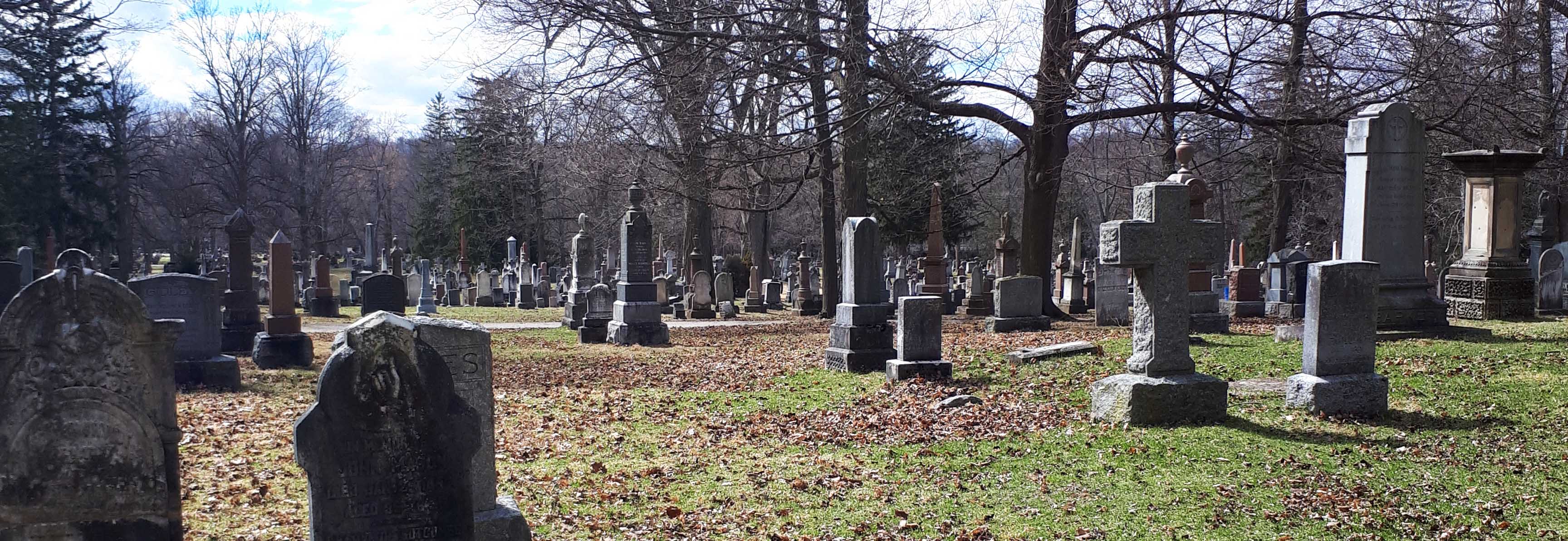
Landscape photo at St. John the Evangelist Cemetery, Newfoundland (photo by Dr. Burchell 2020)

Hello readers, I am very excited to be writing this introductory post for you all with Dr. Meghan Burchell, of Memorial University of Newfoundland. Dr. Burchell taught the undergraduate course ‘The Archaeology of Death’ this Fall 2020 semester, and I had the honour of being her TA! One of the student’s assignments for the course was to create a ‘blog-style’ post which would explore a monument, mostly within the province of Newfoundland and Labrador, to examine the history and politics of monumentalization. 

Part of the challenge with the course and its assignments this semester was, of course, the fact that it was not face-to-face teaching in light of the pandemic. Adapting to the sudden switch to remote teaching brought to light the importance of creating records for, and digitizing said records for, historical artifacts and sites such as graveyards. While part of their coursework was to do just that, create digital records and analysing gravestones in Newfoundland, this blogging assignment asked different questions.

Their blogs answered a number of questions, including:

  • “What does the landscape of monuments in Newfoundland and Labrador look like?”
  • “How can we create a digital landscape of monuments, whether they are memorials, graves, or other monumental sites or objects?”
  • “How are people and events commemorated and remembered in Newfoundland and Labrador?” 
  • “What does a memorial tell us about the site / event / person, as well as the people who erected it?”

Everyone did an amazing job on their blog posts, and in the end I selected six examples to post on Spade & the Grave, that I thought fit well into the theme of this website and with the research that I undertake in death and burial archaeology. The next six posts, written by undergraduate students at MUN, examine monuments and their meaning across the province. In this series we will look at the Peter Pan Statue in Bowring Park, the Terry Fox statue by the harbour in St. John’s, the Statue of Amelia Earhart in Harbour Grace, the Ocean Ranger Disaster Monument, the Renews Grotto, and the controversy of the Gaspar Corte-Real statue. 

It was wonderful to read what the students thought about monumentalization within the province, as well as how these sites impacted their view of the historic events or people they commemorated. Please join us for the series, as we share this series over the last two weeks of 2020!

Student Blog Post Links:

  1. Emma Nugent: The Controversial Statue of Gasper Corte-Real
  2. Alison Batstone: Betty’s Statue – A Grandfather’s Remembrance
  3. Calum Brydon: Terry Fox Memorial, St. John’s, NL
  4. Megan MacKinnon: Ocean Ranger Memorial Garden
  5. Hannah Cooper: Amelia Earhart Statue, Harbour Grace, NL
  6. Jasper Pritchard: The Renews Grotto

Thank you for joining us for this exciting series!


Leave a comment

What’s in my (Field) Bag?

Today’s post isn’t exactly death-related, but I wanted to take a sec and share what I carry with me into the field. If you are starting out in archaeology or are heading into your first field season in cultural resource management (CRM) or a field school, I hope this post can be a little helpful to you!

I’ve been doing fieldwork on and off since 2011, in Ireland, the Isle of Man, the UK, and Canada (BC, NL, and ON), and these items are things that I always like to have on me, and items that have stood the test of time being dragged around the mountains, overseas, corn fields, and most recently the blistering heat and random rain storms of Ontario! Lets dive in and take a look at what’s in my (field) bag!

20200729_182656 (1)

My field bag & gear I always carry! 

Continue reading


Leave a comment

An Introduction of Archaeological Illustration: Small Finds Workshop

Picture 1

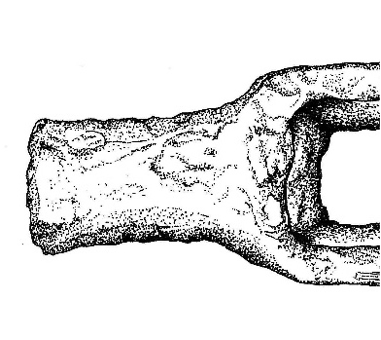
Portion of metal axe head (Lacy 2017)

This Friday, June 19th (Juneteenth), I taught an online workshop for the Newfoundland and Labrador Archaeology Society (NLAS). In case you missed the workshop or wanted a refresher after we wrapped up, I’ve turned the step-by-step drawing tips in a blog post. I presented the workshop from the occupied traditional territories of the Anishinaabek, Haudenosaunee, Lūnaapéewak, and Attawandaron peoples, under Treaty 6.

This post is a departure from my typical death and burial posts, The following post uses illustrations I drew specifically for the workshop, and I hope you find it helpful! In the field, I use my drawing skills in a number of ways, and it is always a skill worth investing time into. Please let me know if you have any questions.

Continue reading


Engagement with Death & Burial: Questions & Comments to a Burial Archaeologist

You might have seen in one of my more recent posts that I was involved in the Doors Open event in London, answering questions and giving tours of two burial grounds that I worked at over the past years: Woodland Cemetery and the Brick Street Cemetery. I’m not going to reiterate that post (though it is linked above if you wanted to check it out), but in reminiscing that even earlier this week, I found myself thinking a bit more about public archaeology of death and burial and how we interpret these topics to the public.

First thing in January I will be presenting a poster at the Society for Historical Archaeology conference with my friend Sarah that follows a little in line with this topic. Our poster is titled “In Memoriam: Challenges in Historic Burial Ground Conservation” and some of these challenges arise when information about conservation and burial grounds are adequately communicated to the public. I’ll be posting more about the poster in Jan, but it bleeds into today’s topic a little!

20190606_144629

A view of Woodland Cemetery, Section R, facing west. 

Continue reading


4 Comments

Ownership of the Grave: Who owns the Dead?

Some of you who are active in the archaeology twittersphere may have witnessed the incident that occurred last night / this morning / semi-ongoing. As it relates to burial archaeology specifically, I feel the need to expand on my original retweet.

Here is a breakdown: An archaeologist with a huge public platform, who is very well known for her branding of the term ‘space archaeology’ (this, in itself, it a whole other story), posted a request to her followers to help fund her latest archaeological investigations in Egypt, her primary study area.

Continue reading


1 Comment

On the Eighth Day: An Explanation for Octagonal Dead Houses

Hello again, fellow death & burial enthusiasts! My goal with these posts is to share my love of a type of structure that isn’t widely written about (clearly my goal is to change that), and inform you all about a burial practice that was reserved for the colder parts of the world…Canada, parts of the USA, the UK, etc. My research on the practice has been restricted to North America and the British Isles thus far, though it is also clear through readings that winter body storage had to happen in many other places as well (ie. Iceland). I can’t wait to dive in further!

Today I wanted to talk about why some of these structures are octagonal in Ontario, as opposed to a standard rectangular or subterranean structures. There might be a method to this madness!

5886003_05964f10_1024x1024

The 15th-century octagonal font at Stoke-by-Nayland, Suffolk, UK. (Image by Michael Garlick 2018)

Continue reading


6 Comments

Significant Women of Brick Street Cemetery: Phoebe McNames, Silvany Tunks, & Hannah Caldwell

It’s a common theme throughout history, that women’s stories are swept under the rug, intentionally or not, to make way for the stories of history’s great men. Of course, with cis women, trans, queer, and otherwise non-gender-conforming individuals being present throughout history, the tales of ‘men’ are only a small fraction of the whole story.

Gravestones from the 19th century have a common formula when it comes to remembering women, and that is by labelling them as wife of… and often not providing any additional information about them. Often nothing much is recorded throughout history about them either, making it even more difficult to find anything else out other than who they married. Today I’d like to talk about three young women who are buried at Brick Street Cemetery, and were early settlers in the area in the mid-19th century: Phoebe McNames, Silvany Tunks, & Hannah Caldwell.

20180916_111725 copy

Continue reading


2 Comments

Gravestone Conservation 2019: Week 2

Hello all, welcome back to another ‘updates from the field’ style post, where I’d like to discuss what we got up to at the cemetery this week! It was an extremely busy week, and we got quite a lot accomplished, and learned a load of new skills throughout it all that I am very excited to use throughout this program and hopefully throughout my career as a historical archaeologist.

xxx20190527_113830

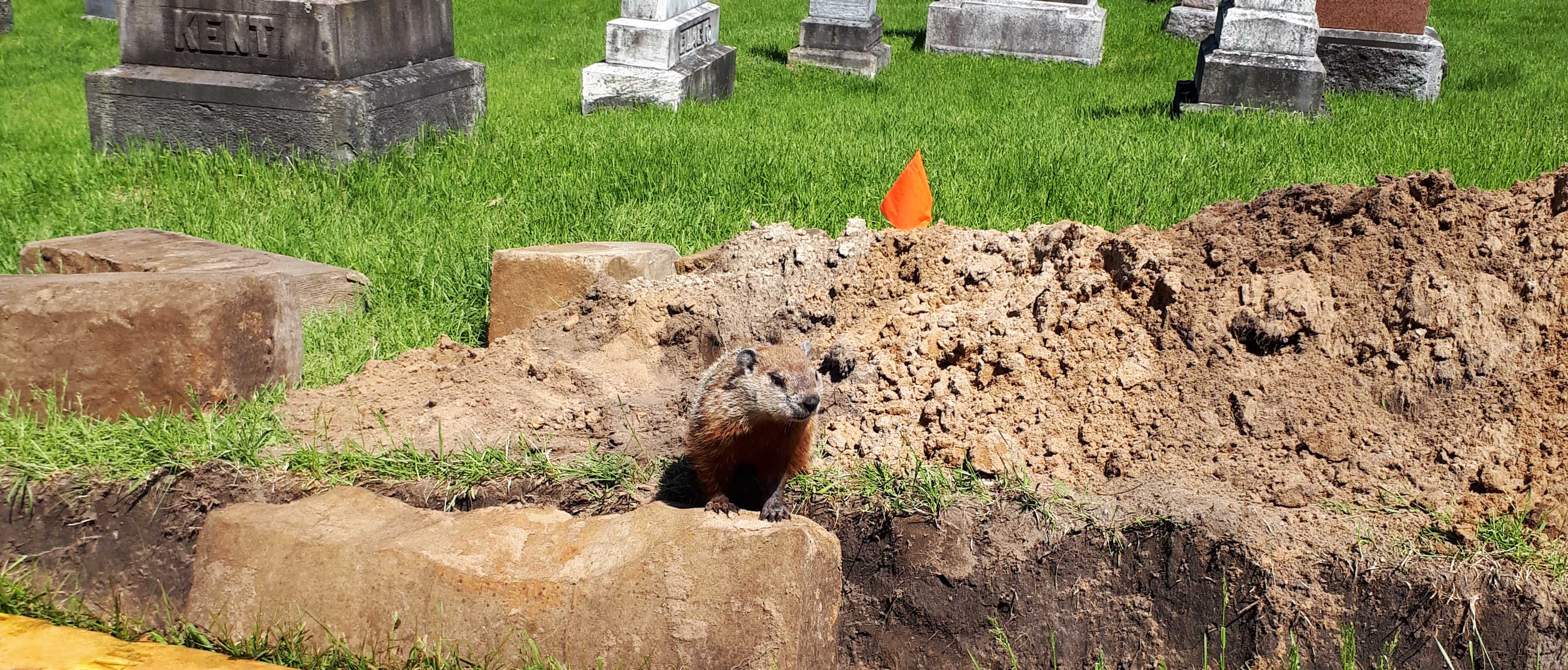
Little woodchuck friend coming to see why we were digging so many holes in their field! 

Continue reading


24 Comments

The Geologic Composition & Weathering of Gravestones.

If you are new to the study of burial markers and don’t come from a geologic background or have prior knowledge in basic geology, grasping the differences in materials found in burial grounds might seem like a monumental task! In this post, we will be discussing the composition and problems/perks of different stone types that are found across North American historical burial grounds, as well as common weathering issues that can be seen across these stones. I do my best to keep this post up to date as I learn more about the geologic processes at work in our historic cemeteries and graveyards.

(last update: December 4, 2023)

xxx20190409_151140
Woodland Cemetery, London. ON. (Photo by author 2019).
Continue reading


1 Comment

Evolution of roman lettering in Newfoundland: A case study at Belvedere Roman Catholic Cemetery, St. John’s, Newfoundland

Today’s post is based on ongoing research that started as a prompt for a term paper in grad school. I’ve been conducting research on roman lettering development on upright gravestones for some time (there is a paper on the way, I swear. It’s bogged down in reviewer/edits land but it will be out there eventually!), and this research was based on my interest in the development of lettering styles on gravestones. More specifically, the development of lettering styles carved in a ‘remote’ area, that might not have access to lettering books or script trends as carvers in more urban centres in the British Isles were. Lets delve in, shall we?

Capture

St. John’s Harbour (photo by author 2016)

Continue reading