Halfway through through the fieldwork season, and I already cannot believe the amount of earth we’ve moved in pursuit of the burial ground! It’s amazing, thank you to the week 1 & 2 crews for all the hard work you put in, I couldn’t have gotten this far without all of you (and your digging hands)!
It was an amazing week over all, so lets dive right in to what we got up to at Ferryland last week:
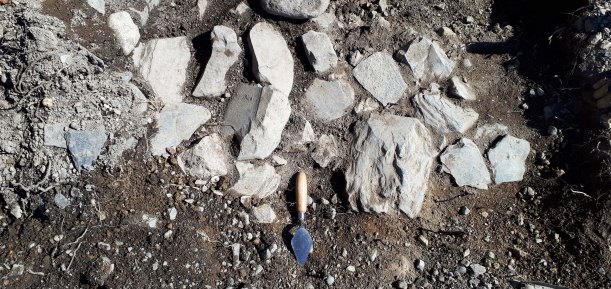
17th-century building rubble from the brewhouse dismantling. We found lots of early-mid-17th-century objects between the fallen stones, as well as rich organic soil, charcoal, burned bones, and other organic material. Photo by author, 2017.
Tomorrow is the day! The 2017 excavation at Ferryland is finally going to start and I couldn’t be more excited! (That’s a lie, I will be more excited when I get on site tomorrow). I wanted to take this opportunity to tell you all a bit more about this year’s excavation and where I am taking it for the next 4 weeks. I’ll be blogging every week about the latest adventures and finds as well and I hope you all come along for the ride!
Map made by Robyn Lacy & Bryn Tapper, 2017.
This is a map I made under the guidance of Bryn Tapper, a PhD candidate in my department who knows way more about GIS that I do! It’s an aerial photo of the Ferryland harbour, centered on the 17th-century British settlement area in the Pool, with a later, known burial ground circled in red on the left side of the image. The Pool refers to that little curl of land in the middle of the image, which formed naturally, if you can believe it! It’s the perfect little protected harbour, and deep enough to bring ships into, making it a wonderful location for a small settlement 400 years ago. Continue reading →
I did say that my next post was going to be about the Ferryland gravestones, so here we are! Before I can get into the stone analysis bit though, we first need to discuss death at Ferryland.
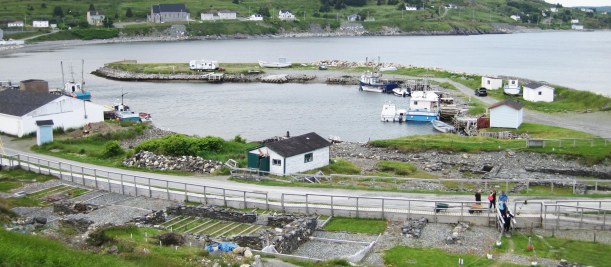
Ferryland had long been known as a good harbour before the establishment of the 1621 settlement. In fact, there have been Beothuk hearths found at Ferryland, but their relationship (if any) with migratory European fishermen prior to the settlement being founded is unknown. The natural spit that juts out into the water creates a protected harbour, breaking waves and keeping boats sheltered from the harsh Atlantic storms. It was a natural place for people to want to live, and to die. Continue reading →


 Spade & the Grave