

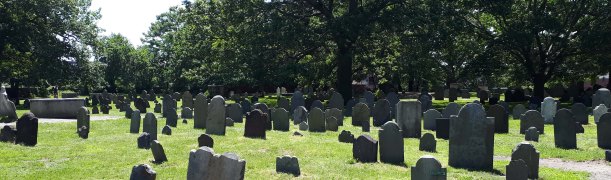
I recently had the pleasure of visiting some of the historic burial grounds in Salem, Massachusetts during my recently holiday to the area. I was particularly excited to visit Salem because it was not only an important site in the history of colonial New England, but it was a part of the survey I did of settlements for my MA research so getting to see it in person was a real treat! I decided to use the opportunity as a case study to investigate a particularly popular gravestone design.
 Continue reading
Author Archives: Robyn Lacy
Death Cafe – My first experience
Yesterday evening I had the chance to attend my first Death Cafe, the second one ever held in St. John’s. It was a wonderful experience that I wanted to discuss through the medium of this blog!
Firstly though, what exactly is a Death Cafe?

‘Guilford’s Town Greene’ – a vanished 17th-century burial landscape in Connecticut
The alternate title to this post is: ‘Guilford’s Town Greene’ – The burial ground that if you give me a moment, I will never stop talking about’. If you’ve heard me speak at a conference or lecture, or…ever… you’ve probably heard me use it an an example of a curious burial landscape, one that has seen endless change, interaction, and ultimately erasure. It’s a very interesting case study in the changing views of death in Western society as well, so if you’re here for the modern death aspect, read on!

Continue reading
Living History Radio Interview: Headstones, Hexfoils, and Historical Archaeology
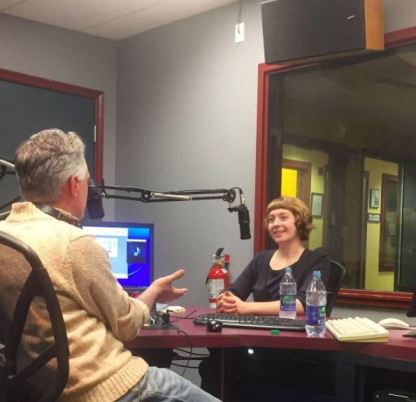
First time in a radio studio! Photo from @ICH_NL
Recently I was invited to come chat about my research on colonial burial landscapes on the radio show / podcast ‘Living Heritage’. The show, hosted by Dale Jarvis and broadcast on CHMR – 95.3 FM (and apparently other radio stations across Canada, you might just hear me talking about graves out of the blue), focuses on people which cultural heritage in many different capacities.
This was my first radio interview, and my first time seeing a microphone that is kind of suspended in front of your face in real life! I’m more excited about that than I should be.. but it was such a cool experience, and I had a ton of fun recording the episode with Dale! We mostly talked about my research and some of the topics that I’ve discussed here on the blog with you guys, hexfoils, stone importation to Newfoundland, etc. Death and Burial sorts of things!
Without further adieu, you can listen to the full episode by CLICKING HERE!
You can also visit the ‘Intangible Cultural Heritage’ Blog and read about / listen to the interview HERE.
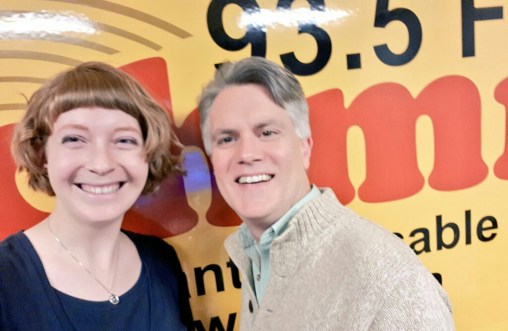
Gotta have a selfie to commemorate. Thanks for having me on the show!

Temporary Graves – Burial in Luxembourg & the Transmortality Conference 2017
I recently had the honour of presenting some of my research at the Transmortality Conference in Luxembourg City, Luxembourg. The conference dealt with the themes of materiality and spatiality of death and dying historically and in modernity, and as my research mainly deals with spatial aspects of burial landscapes, I was beyond excited to attend and present at the conference, and chat with like-minded researchers from all over the world!
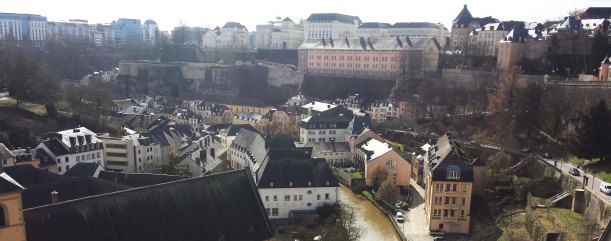
The Transmortality project is being conducted by Université du Luxembourg, and if you’re interested in their work, there will be a special issue of the journal Mortality coming out on the theme in 2019. More information on the project can be found here: https://transmortality.uni.lu/
Continue reading
Weekend Death Reads (1)
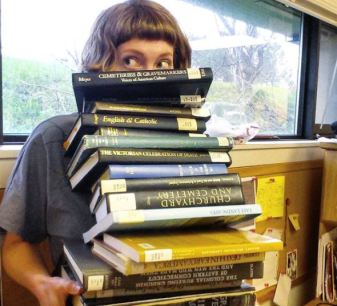 Last week was hectic, hence the lack of posts (sorry everyone!) but I promise my absence will lead to some really interesting posts in the next week or so that I’m really excited to share as soon as I can! In the mean time, I thought I would do a slightly less academic post on this fine Saturday evening and talk about some death / burial / mortality books that I’ve been enjoying lately, or obsessing over and recommending to everyone who comes near me over the last few weeks.
Death & Commemoration at Ferryland – What we know so far.
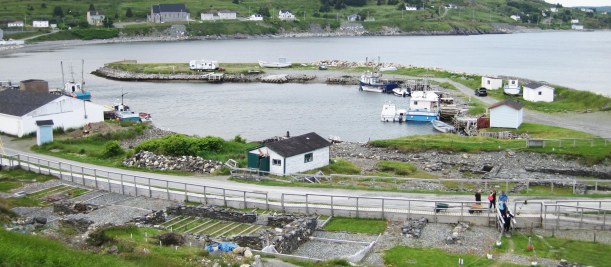
I did say that my next post was going to be about the Ferryland gravestones, so here we are! Before I can get into the stone analysis bit though, we first need to discuss death at Ferryland.
Ferryland had long been known as a good harbour before the establishment of the 1621 settlement. In fact, there have been Beothuk hearths found at Ferryland, but their relationship (if any) with migratory European fishermen prior to the settlement being founded is unknown. The natural spit that juts out into the water creates a protected harbour, breaking waves and keeping boats sheltered from the harsh Atlantic storms. It was a natural place for people to want to live, and to die.
 Continue reading

Outsourcing Monuments? – Gravestone carving VS. importation in Newfoundland
 In a place often referred to as ‘The Rock’, it sounds a bit redundant to be importing gravestones, but for a period in the 18th-early 19th century, that is exactly what people in Newfoundland were doing. By people, I of course mean people who could afford to have gravestone carved overseas and shipped across the ocean. There are locally carved gravestones as well going back to the 17th-century! I even have a puzzle for all of you gravestone enthusiasts out there, but we’ll get to that in a moment.
Continue reading

Medieval Graffiti in a (historic) New England Context
That title should also have the word ‘mortuary’ in it somewhere, but you probably guessed that’s where I’m going with this! Today I wanted to talk about above-ground material culture relating to historic burials. More specifically, about the classic gravestones of colonial New England and symbology that appears with some regularity throughout the region that display an iteration of several compass-drawn symbol often found in medieval churches and on items of furniture in the British Isles.

‘Ye Antientist Burial Ground’, 1652~, New London, Connecticut. Photo by author, 2015
Tales from the Trenches – Mystery Soil Stains & an Unexpected Discovery
Archaeology isn’t quite like they show it in the movies or on Time Team. Of course, we all wish we could just walk into an area, feel the wind, and know exactly where a site is but unfortunately it doesn’t work like that (and we usually have more than 3 days if excavations are happening too)!

Last summer during my excavation at Ferryland, there were quite a few moments that started out feeling as if we’d found something very dramatic, which quickly dissolved into mild disappointment and sighs. But that’s archaeology right? If you’re doing a project that is looking for something, rather than trying to see what was happening in general, then there are going to be a lot of empty test pits. This one wasn’t empty though…
 Spade & the Grave