Hi friends, it has been a minute since I’ve sat down to write anything on the blog! My last post was in May, and since then it has been a pretty busy summer with fieldwork, family visits, and a variety of trips! This winter, I’ll be updating our Black Cat fieldwork blog on some of the cool projects we’ve worked on, so keep an eye out for that HERE!
This August, we (my husband Ian and I) had the wonderful opportunity to travel to Utrecht to attend and present at the Association for the Study of Death and Society’s bi-annual conference, ‘Death, Dying, and Disposal 17’. Held in Utrecht and hosted by the Utrecht University, it looked like it was going to be a fantastic event, and my first DDD in person after presenting digitally a few years ago, so I was very excited. Of course, you can’t just fly all the way to Europe from Newfoundland and not add on a little holiday in there too, so we started off the trip in Paris! There were some excellent death studies related sites, so lets get into it.
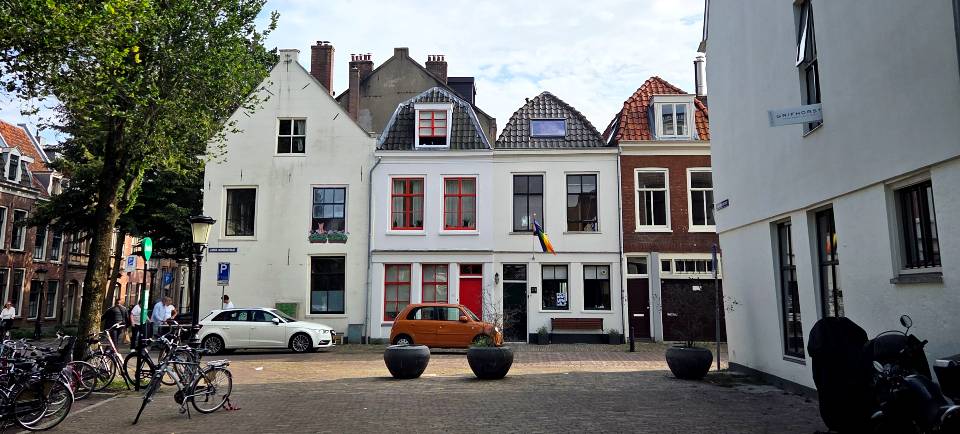
A city square, Utrecht, Netherlands (photo by author 2025)
Hello readers! It has been a wild last few months with my defence, dissertation edits, submitting my final dissertation (convocation next month!) and a sprinkling of fieldwork. I’m excited to get back to a bit of writing on here, and bring you all some interesting mortuary archaeology pieces! Today, I’m excited to finally be sitting down to write a bit about our recent trip to Scotland with my parents, and all the amazing burial traditions we learned about while there.
We (my husband and I) travelled to Edinburgh to meet up with my parents, who had gone over a few days before us to explore the city. The joke for the entire trip was that we were only going to look at old stuff and birds, as a group of two archaeologists and two birders who also like history! And look at old stuff and birds we did! I also dragged everyone into every chambered burial cairn we came across, and we all brought headlamps on the trip for just that reason. It was amazing, lets get into it!
The Wideford Hill Chambered Cairn, Orkney (photo by author 2024)
Hi friends, we’re back! This past Saturday we went out to New Perlican so I could give a little presentation to the community on my research in their burial grounds! It’s important for public archaeology that you actually tell the community you worked in about your research, so I was very excited to show off the maps and conclusions about my fieldwork surveys from the past 2 summers. I put together a little presentation showing the maps of the sides as well as several gravestone examples from each site to show everyone, and was able to tell them that we are going to be back in September to attempt GPR survey around St. Mark’s Cemetery to try and location the first Anglican church that was built in New Perlican. Stay tuned for that!
The purpose of my fieldwork and studying of these burial spaces was to take a closer look at the development of the burial landscape within a singular community, and how it has grown and evolved over the years, reflecting the community’s relationship with these spaces and mortality as a whole. We’ll also see some larger trends in burial spaces organization that are reflections of what we see in the rest of North America in the late 18th and 19th centuries. I also wanted to map these sites for the community, so that they would have a better record of gravestone location and site boundaries for future research and development.
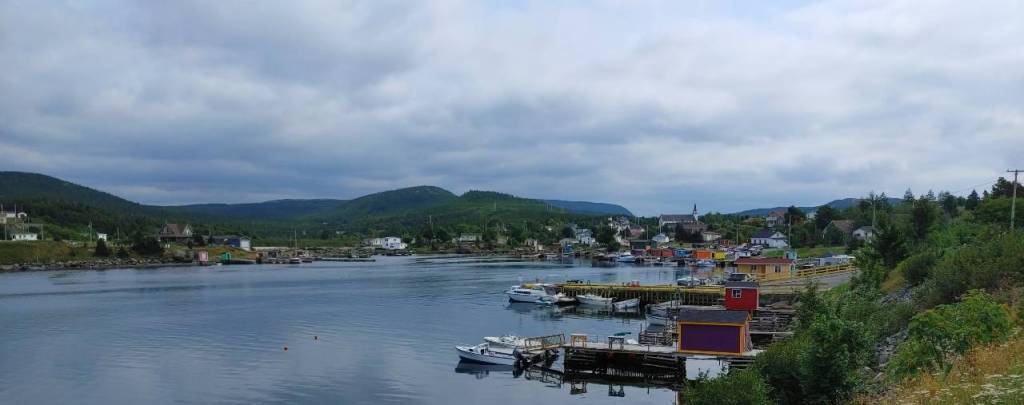
View of New Perlican from Bloody Point (photo by author 2023)
Hello readers, its been a minute! Since I last wrote a blog post, I have finished and passed my comprehensive exams, searched for and moved into a new apartment with my husband and our cats, and have spent the last 6 weeks working on my thesis proposal, writing my manuscript, and doing a bunch of other bits including a quick trip out to New Perlican for a little field visit.
Today, I wanted to talk about why cemeteries (and burial grounds, and graveyards) are worth visiting, in my opinion as a person who has always been fascinated with them as historic sites, and as an archaeologist who has focused the majority of my research career on death and burial as a part of human existence. I was inspired to write this post after attending a talk yesterday by my friend and colleague Lee Sulkowska, a PhD Candidate in history at Deakin University in Australia, whose research explores how cemeteries are a mirror of the society that created them through fascinating archival case studies. Her talk was in support of Ukraine (tickets were donated to humanitarian aid) through the Instytut Dobrej Śmierci, or the Institute of the Good Death in Poland. After the talk, author Loren Rhodes was telling us about her upcoming book, “Death’s Garden Revisited: Personal Relationships with Cemeteries” and it had me thinking about what stands out about burial spaces to me, both as a person and a researcher. This post is more of a personal essay than a research post, but I wanted to share it all the same.
Subtitle: “Doing a PhD during the pandemic is pretty weird sometimes“
Hello readers, happy 2022! It’s been quiet over here on Spade & the Grave as I took about a month off from looking at my laptop, after spending the entire fall working on my comprehensive exams. As I was tweeting or talking about my comps to various group chats and platforms, many people asked me what the process is, so I thought I’d write about that today!
St. Mark’s Cemetery, New Perlican (Lacy 2021)
In most universities in North America, our PhD programs involve taking courses and comprehensive exams of some form before being considered a ‘candidate’ and being able to move forward with our program, and are 4-years minimum. This differs significantly from programs in Europe and Australia (and probably other places, I’m not sure) where the typical PhD program is 3-years, with an additional 4th for writing sometimes.
Hi everyone, this is a blog post version of the talk I gave at the Death, Dying, & Disposal 15 conference this past week (#DDD15). It was my very first DDD conference, and while digital, I was very excited to attend! Digital conferences are exhausting and maybe not as easy for networking or getting together in the ways that traditional in person conferences have been, but they really open attendance doors for people who might not be able to travel around the world for talks every year! I presented from St. John’s, Newfoundland and Labrador, Canada, on the traditional territory of the Beothuk and Mi’kmaq people, and acknowledge their ownership of the land and my place here as a settler.
My talk was titled “Gravestone Conservation & Social Media: Benefits and Challenges of the Online Dissemination of Gravestone Cleaning”. If you know of any other examples of gravestone cleaning online that you’d like to share with me, I’d love to see them!
Back for another research blog instalment! The past few weeks have been pretty busy, with Black Cat projects, some comps reading, a camping trip and hiking in Gros Morne, getting my 2nd covid vaccine, and my parents coming out to visit. We still managed to sneak in a little community archaeology engagement though, which turned out to be sort of a conjuncture between the NLAS (Newfoundland and Labrador Archaeology Society) ((I’m the VP this year)) and my own research in New Perlican.
The town of New Perlican was holding their annual Heritage Day this past Saturday, and the NLAS went down with our museum in a box / ‘edukit’ to talk to anyone interested about archaeology in the province. I was also asked to give a short tour and talk about the Bloody Point burial site, which is part of my PhD research! Check HERE and HERE if you need to get caught up on the site! It was an amazing day, and I’m excited to share it with you all!
Looking towards New Perlican from the road to Bloody Point (photo by author 2021)
I survived my first week back in the field! This past week was the first week of my PhD fieldwork and I could not be more excited to share it with all of you! I find blogging about my fieldwork and research as a go a really good way to gather my thoughts about the process, as well as share all of that with you, dear readers, who may not be archaeologists or know what goes into archaeological research.
My fieldwork this week involved surveying some of the historical burial grounds in New Perlican. Part of what I’m interested in exploring in my PhD research is the development and changes to the burial landscape within a community. New Perlican has been the home of settlers for about 400 years, and I will be exploring how their burial spaces changed and evolved with the community through the years! Part of that work is recording and mapping the older burial grounds themselves, taking stock of the gravestones that are in each site, the styles, how the community used and related to the sites.
Most of that analysis is for later though, this week was the mapping itself! Buckle in folks, this could be a long one. (all photos in this post were taken by me)
View from the Hefford Plantation (photo by author 2021)
Hello readers, I hope you are having a lovely weekend and first day of spring! Here in Newfoundland, the snow is still sticking around but I can see the walkway outside my door again, so we may be getting close to actual spring weather. As much as I like the winter, I am looking forward to not scraping the car off in the morning or struggling to clear a path to the door through snow that is already turning into ice blocks. Also, with warmer weather comes the hopeful inching closer of the field season (covid restrictions permitting). Everyone wear your masks and wash your hands, so my colleagues and I can stomp around graveyards and dig holes (not in the graveyards), please!
I haven’t had much to blog about recently, as I am in the last couple weeks of my PhD coursework! Hard to believe that this part of my degree program is nearly finished! I’ve been working on outlining the topics and questions for my comprehensive exams this semester, writing little sections on my manuscript every week, sprucing up the NLAS website (please go check us out!), and working on another little project that is soooo cool, but I can’t share yet! Get excited though, it’s going to rule.
A few weeks ago, however, I got the chance to work with ‘Archaeology Now‘! Archaeology Now is a:
“Houston-based affiliate of a nationwide organization—the Archaeological Institute of America. [They] were founded in 1967 by Dominique De Menil, Philip Oliver Smith, and Walter Widrig. Today, we present an ambitious series of events for the public focused on our many stories through time. [Their mission is to] promotes awareness and appreciation of world cultures through archaeology.“
I was invited to film an episode for their ‘Tiny Lecture Series’ for their youtube channel, about my book project on hexfoils and other protective symbols in a mortuary context for Berghahn Books. After a few trial runs with weird lighting, we made the video below, which I am super happy to share with you all. I hope you enjoy the finished lecture that I filmed in the middle of our entryroom / library, and know that between all takes, my cats were climbing the bookshelves, sitting on the chair with the tripod on it and making it all vibrate while scratching themselves, and yelling at me in confusing! Also, there are hexfoils!
A handful of weeks ago, before the latest alert level 5 lockdown here in Newfoundland, I had the opportunity to meet with CBC contributor Andie Bulman to discuss my PhD research and our new little business, Black Cat Cemetery Preservation. It was wonderful to chat with her, and as any research knows, I loved the opportunity to talk about my research!
The article, which opens with an image of me working at Woodland Cemetery in London, Ontario in 2019, discusses my PhD research on burial grounds, concerns with gravestone conservation, and what we hope to accomplish with our (mine and my husband Ian’s) business. It’s a wonderful platform that I am so grateful to have, and I hope the message gets spread far and wide!




 Spade & the Grave