Spade & the Grave

death and burial through an archaeological lens


Leave a comment

My PhD Defense: August 14th, 2024

This is just a short blog post to let all my readers know, in case you haven’t seen it on my social media yet, that on Wed, August 14th, I successfully defended my PhD Dissertation. Pass with minor corrections!

Let me reintroduce myself to you all, I’m Dr. Robyn Lacy, PhD in Archaeology!

Popped a bottle of Veuve Clicquot to celebrate right after my defence was over!

Of course, this was just the defence and I do have some corrections to make before officially submitting to my university for graduation, but when you pass your defence they call you ‘Doctor’ right away, so I’m rolling with it. I’m partway through the corrections at the moment, and if all goes well, I’ll get to convocate in October this year with my husband, parents, and best friend in the audience!

I wanted to write this short blog post to sort of go over the defence process (defense? writing it either way looks wrong at this point), now that I’m on the other side and it doesn’t look like quite as huge and scary of a monster. And because I’ve been away from my computer for a bit now and a blog post is a good way to get back into the writing mindset.

I completed the first draft of my dissertation in pieces, submitting each chapter to my supervisors as I went as early as February 2023. They sent them back with edits as I went as well, and I made changes. The full second draft was completed before Christmas 2023 I believe, and I sent it off for more edits before finishing my Hexfoil book edits and sending that manuscript back to my publisher as well. More edits came for the dissertation in the new year from my two supervisors (bless them for reading my behemoth of a dissertation so many times), and I got all those changes and tweeks done. Then we sent it off to my external supervisory committee member, and once their comments were back and changes were made, I officially submitted my dissertation for examination in May 2024. Date unknown, everything is a blue and my brain may have leaked out of my ears at this point.

In June I indexed my hexfoil book and approved copy edits, while waiting for examiners to be lined up, given my dissertation, and for a defence date to be set by the School of Graduate Studies. I’d heard horror stories about students having to organize their own defences, so I’m really glad that at this point, it was all out of my hands! Then I went on holiday with my husband and my parents around Shetland, Orkney, and the Highlands of Scotland for three weeks (blog posts to come!).

After we got back from holiday, there were a scant 1.5 weeks to go over my presentation and review my dissertation before it was time to defend! I rehearsed my presentation once a day, not on the weekend, leading up to my defence, and tried to make sure I was getting lots of good food and lots of sleep in the days leading up. I’m not someone who can cram work into the last minute, so I had my presentation 99% done before we left for Scotland, so I wouldn’t be stressing about it too much on our holiday.

I didn’t know who my examiners were going into the defence. Apparently some places they tell you that beforehand, but at MUNL it’s *meant* to be a secret. I was really excited to see some familiar faces examining my work, scholars’ whose work I really admire, which made me less nervous immediately. I was also so fortunate to have a bunch of friends and family who took time out of their day to watch my defence, and that was so special. I felt really supported, thank you everyone!! I signed onto my Webex defence at 1pm, and my presentation wouldn’t share! Great start! I could feel my eyes prickling a little with the frustration, and one of my examiners stepped in to suggest I log off, double check any settings, and log in again. That was a good chance to take a few deep breaths, and when I logged in again it was working fine! Phew.

Post defence! Hurray!

My presentation was about 25 minutes (it had to be under 30), and then the examiners each got time to ask me questions in two rounds, with a 15 minute break between them where I ran to the washroom and then paced around my house nervously. The entire thing took 2.5 hrs, and my cats were not impressed to be locked out of the office. Guests were all kicked off before the deliberation, and I was put into a breakout room to wait. I had time to stand up and leave the room for about a minute, and then they called me back and told me “Well, that was a short deliberation! Congratulations, Dr. Lacy!”

There was a bunch of grinning, lots of thank yous, we took a screenshot with the examination committee which I’d love to get set to me by whomever took it, and then it was over! The second I exited the meeting, I burst into tears! What a ridiculously huge milestone, and two weeks later as I’m writing this, it still doesn’t really feel real! I’m in the middle of my minor revisions at the moment, and once those are finished I’ll be able to apply for convocation this fall, but the huge step is really the defence.

The best advice I got before my defence was the same as my comps, once you are in that room, you’re the expert on your topic and for the most part the questions people are going to ask you are out of interest. They are not trying to trip you up or humiliate you. I got a fair amount of questions about my literal writing style which I wasn’t expected at all, but overall the questions were really interesting, and I took a bunch of notes to apply to my final revisions now that everything is finished. It was overall less stressful than I was expecting, while also being the most stressful thing at the same time, but now it’s done!

#PhDone!


3 Comments

PhD Updates: Writing Process & Next Steps

Hello friends, apparently it has been a little while since I did a blog post! It’s been quite a busy summer, so I’ll do my best to fill you in. Last post I talked about the presentation I gave in New Perlican at the end of May, about my fieldwork and that portion of my dissertation research to the community, and we had a lovely time! Since then it has been a whorl wind of activity! My brother and sibling-in-law visited, my husband’s parents came out to visit, my parents were here visiting, and between everyone in our families being in the house, we did a lot of fieldwork for Black Cat, and even managed to squeeze in a little camping trip to Terra Nova National Park with some of our friends, which was a lovely break! Also of course, there was a lot of writing happening in there too, which is mostly what I’d like to chat about today.

Lovely fall pumpkins at Lester’s Farmers Market (for ambience) (photo by author 2023).
Continue reading


4 Comments

Dissertation Writing Updates: April 2023

We’re nearly through April suddenly, friends, and as I look out my office window at the snow drifts covering the old wooden boats in my neighbour’s backyard, which is slowly melting away, I decided to do a little update on how my dissertation writing is going! Lets start with a summary of what I’ve been up to, and then how I’ve been structuring my work and project going forward!

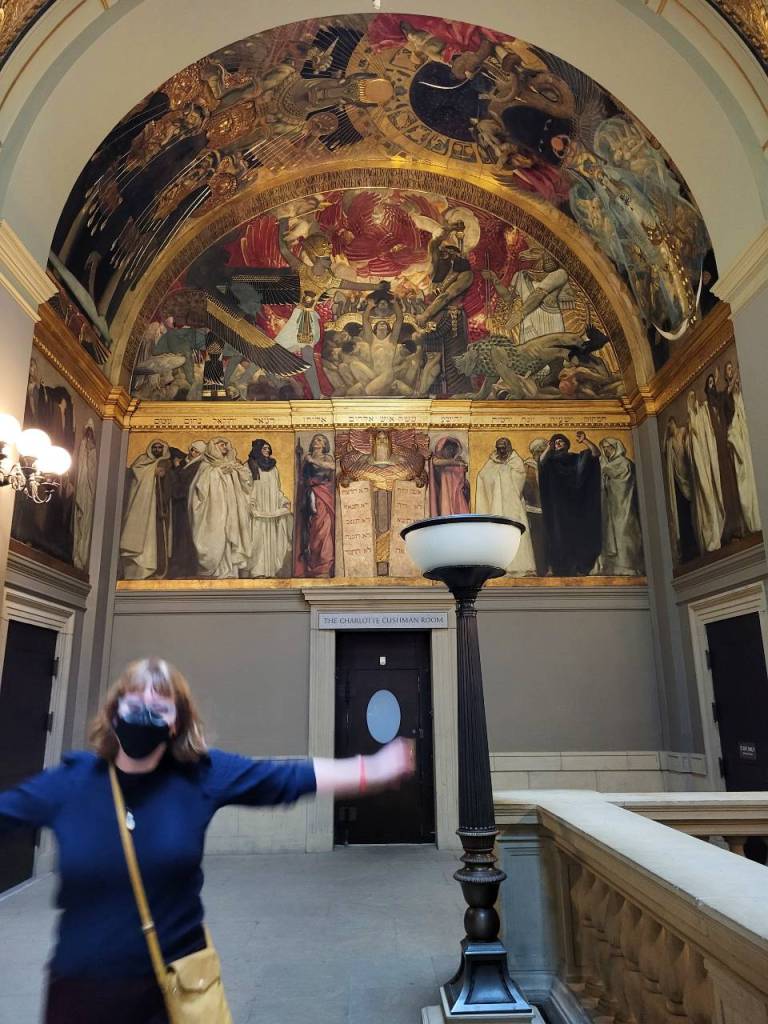
I think this picture encapsulates how excited I was in Boston during my research trip.

My blog has been all conference travel and research trips recently, and I feel like it’s been a very hectic last few months. In September 2022, we attended the Death & Culture IV conference in York (& went on our belated honeymoon), then in October I visited Halifax, Nova Scotia, to do some research at the provincial archives and so a site visit out in Annapolis Royal where I had a great meeting with Parks Canada and Mapannapolis staff! In November, I was doing research at home, and then we travelled to Arizona to visit my inlaws and their new house, and we got to see a few very interesting 19th-century burial grounds in the desert! We didn’t go anywhere in December, but I was frantically finishing my 2nd book manuscript which is now with my editor, and resting over the holidays. In the first week of January, we were packed back up and off to Lisbon, Portugal, for the Society for Historical Archaeology’s annual conference and a few days of exploring post-conference! Portugal was amazing, Ian and I both want to go back asap.

Finally, I had a second research trip in February to Boston, Massachussets and the Hudson River Valley, New York! I went to the Boston Public Library’s Special Collections which was just an amazing experience (both for research and for seeing cool archives), and the Mass Historical Society’s archives while in the city, then site visits to Sleepy Hollow and Albany, NY, as well as a meeting with the archaeology staff at the New York State Museum in Albany. Travel is done for the next little bit, and I’m pretty excited to not be in the Toronto airport for a few months!

Continue reading


Leave a comment

PhD Research Trip 2: Site Visits to Sleepy Hollow, Kingston, & Albany, New York

I know you’ve all been on the edge of your seats, waiting for the site visit portion of my research trip blogs, right? Right?? Well don’t you worry at all, I’ve got all that fieldwork goodness for you here! (is this a weird way to start a research blog? haha)

The second half of my research trip consisted of site visits to three of ‘my’ Dutch settlements that I’m looking at for the landscape analysis portion of my dissertation research. Those sites are the infamous Sleepy Hollow, NY, as well as the town of Kingston, and Albany, NY. You might be familiar with Albany from the Broadway Hamilton, as the city where Philip Schuyler and the Schuyler sisters lived (coincidently we did go see Hamilton live in Boston, and it was amazing, 100/10), and you likely already know a little bit about Sleepy Hollow, so lets get into what I was doing there, and what I’m looking at for these sites!

Old Dutch Reformed Church, Sleepy Hollow, NY (photo by author 2023)
Continue reading


Leave a comment

SHA 2023 Conference, Lisbon, Portugal

It’s time for another travel blog, coming to you live from…my home office where I am writing this very jetlagged, because we got home at 2am yesterday after 27 hrs of travelling! This year, the Society for Historical Archaeology (SHA) hosted their annual general meeting and conference in Lisbon, and over 900 archaeologists descended on the city to attend the event. This conference was meant to be held in Jan 2021 originally, but for some weird reason that I couldn’t possibly remember, they had to push it forward by two years, and thankfully were able to go ahead with Lisbon 2023 instead! So here we are, drinking vinho verde and talking about archaeology in a gorgeous city of colourful tiles and Moorish castle ruins.

The conference ran from January 4-7, 2023 and was hosted at Universidade NOVA de Lisboa. We were able to volunteer as grad students this year to help with registration and monitoring sessions in exchange for not being charged the registration fee for the conference, which is a great initiative that the SHA always has at their conferences. We spent about 8 hrs each (me and my husband, Ian), volunteering over two of the conference days, and attended a load of talks and some events as well! This is going to be a lot of conference stuff, as well as a lot of talking about food and wine, as you do.

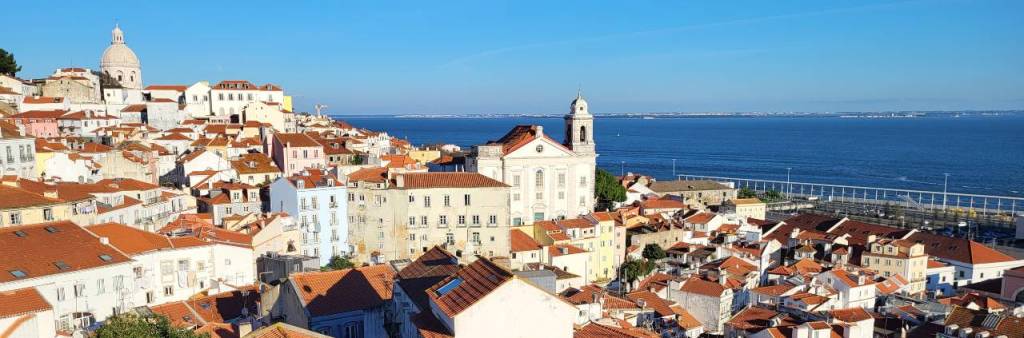
Overlooking the city and river from a viewpoint in Alfama, Lisbon (photo by author)
Continue reading


6 Comments

Burial Ground Mapping in New Perlican: Total Stations & Gravestones

If you’ve been a reader for more than a minute, you might already know that some of my PhD research is taking place in the outport community of New Perlican. Well, I’m currently working on my second comps paper, and that means it’s time to write another blog post to let some of that writing energy go somewhere, now that I’ve met my page goal for the day!

Today I wanted to share the maps that were made for my project by my colleague Bryn, who is a mapper extraordinary and taught myself and Ian how to use the total station theodolite (TST or total station) ((which is something I need to remember finally, rather than re-learning every time I need to use one)). The benefit of using the total station to record the gravestones is that not only are they geo-referenced within cm’s accuracy, but it allowed us to create accurate maps of the gravestones for the community to have on record in their archives.

Bloody Point grave marker 1, BP1 (Lacy 2021). This is an excellent example of a rough fieldstone.
Continue reading


5 Comments

PhD Fieldwork Part 1: Surveying Burial Grounds in New Perlican, NL

I survived my first week back in the field! This past week was the first week of my PhD fieldwork and I could not be more excited to share it with all of you! I find blogging about my fieldwork and research as a go a really good way to gather my thoughts about the process, as well as share all of that with you, dear readers, who may not be archaeologists or know what goes into archaeological research.

My fieldwork this week involved surveying some of the historical burial grounds in New Perlican. Part of what I’m interested in exploring in my PhD research is the development and changes to the burial landscape within a community. New Perlican has been the home of settlers for about 400 years, and I will be exploring how their burial spaces changed and evolved with the community through the years! Part of that work is recording and mapping the older burial grounds themselves, taking stock of the gravestones that are in each site, the styles, how the community used and related to the sites.

Most of that analysis is for later though, this week was the mapping itself! Buckle in folks, this could be a long one.
(all photos in this post were taken by me)

View from the Hefford Plantation (photo by author 2021)
Continue reading


2 Comments

PhD in a Pandemic: The First Few Months

It’s a strange time to be reading about death, I’ll just start with that thought.

When I planned my PhD project, in the spring/summer of 2019, covid-19 wasn’t on our radar and I was happily planning our move back to Newfoundland for the later summer of 2020. After the January 2020 SHA conference in Boston, where there were undoubtedly some people with covid in the city at that point, things began to go downhill. Among other things (replanning our wedding, for one), we had to examine when or if moving was going to happen. How do you start a PhD online, in a different province? How do you focus? And how, I wondered, do I read about death in the news and in my research everyday? How do you talk about your research while people are suffering loss around you?

It’s harder to focus, that’s for sure. It’s harder to keep up with those emails from students and profs, class demands, blog contacts (please don’t stop them, just bare with me re response times!), the dishes and vacuuming, settling that anxiety creeping in, reading for fun, etc. Everything feels like a lot, for everyone, and slowing ourselves down is definitely not a bad thing during this time. I’ve seen loads online about people bragging about being so productive in lockdown, but please don’t listen to them. My book was published in 2020, and that’s not a productivity brag, just the publishing timeline (I didn’t work on it much beyond approving proofs in 2020). Working on research soothes me a little, keeps my restless hands doing something via typing since knitting too long aggravates my fieldwork-injured trigger finger/claw fingers now (archaeology, right?).

I write about death, and people are dying of more than just a scary new virus everyday. In 1628, Sir. George Calvert wrote a letter about half of the settlers at Ferryland being struck down by an unnamed illness. The colony must have been terrified, and those who were not sick had to shoulder extra work while also taking care of the sick. I talk about death and burial, as a universally experienced part of life, but our generation has never experienced anything like this. We are building the tools to survive through a pandemic, and hearing about what happened in historic situations helps a little, I think. A world-changing pandemic is certainly not how I thought I’d start my PhD program, and it’s come with learning a lot of new ways to relax and step away from stressors, academic and world alike.

I’m excited to get into 2021 and hopefully it will become more uneventful as we go. I’m looking forward to fieldwork, prepping for comps, working more on my second book, and hopefully seeing friends and family again soon! Do what you need to get through. As Dr. Fitzpatrick said in the covid briefing last night, Hold Fast, Newfoundland & Labrador.


2 Comments

Return to the Rock: PhD Research Outline!

Hi friends, it’s been too long since I’ve written a post! Hope everyone is washing their hands and staying out of large gatherings during this ol’ covid-19 outbreak we’re all dealing with. Also you don’t need that much tp, friends. Ok, since coming back from Boston in January, I’ve started a new position with a local CRM firm, TMHC, as their archaeological, cultural heritage, and social media technician! It’s been amazing so far, and I can’t wait for the field season to start! If you follow me on social media though (or, you know, read the title of this post) then you’ll know I’ve had another big thing happen in the last few months…I’ve been accepted into Memorial University of Newfoundland’s PhD program for Archaeology, which starts Sept 2020!

Yay!!

I decided I wanted to do a PhD because my favourite part of archaeology besides the excavation is the research & the writing. I really love writing up results, explaining the thoughts behind doing specific things, digging into the backgrounds, and learning about how people operated in the past. Since finishing my MA in 2017, I’ve been continuing my research and writing on my own time, published 2 papers, have been working on a manuscript, and have another project up my sleeves, along with giving some public talks and stuff….and that takes a lot of time! What better way to balance all this free work than diving back into a PhD where all this research I’m already doing can move to the forefront of my priorities? I’m really excited to focus more of my energy on this research.

20180713_134914

The author with a cemetery sign, 2018.

Continue reading