
Happy New Year! It’s probably time for another blog post, right? I’ve spent the the last year working non-stop of my dissertation, writing and editing, and now the whole document has been compiled and is with my supervisors for another run through! Then I’ll have more tweaks to make before it goes off for committee review, and then sometime in the spring/summer I’ll be defending! In the meantime though, I’ve been writing a public-facing article on counter-magic use in Newfoundland (keep an eye on the NQ Magazine), being an editor for a book volume I’m collaborating with a colleague on, scrambling around planning a trip to Scotland with my parents, and peer-reviewing other peoples’ work. And sleeping til like 9 am everyday.
Before I finished compiling my behemoth of a dissertation, however, we flew to Arizona for the Christmas holiday to visit my husband’s parents and revel in the fact that there was not rain and snow blowing horizontally across the horizon for a week. It was very relaxing, we mostly read, played games, drove around the neighbourhood in a golf cart, and drank wine watching the sunset, but I did manage to sneak in a little history exploring while we were there as well!
If you’ve been a reader for a while, you may remember my blog post last year about the Vulture Mine (click HERE), where I discussed visited the mining ghost town of Vulture Mine, what you could see from years of aerial photography, and the nearby cemetery that served the town. It was really cool to visit, and I definitely want to go back sometime! This trip, I was eager to visit Henry Wickenburg’s grave, the founder of the mine and of the town of Wickenburg, named after him. Now called the ‘Henry Wickenburg Pioneer Cemetery’, this small burial ground is listed on the USA National Register of Historic Places, and was originally on Henry’s ranch land within what became the town of Wickenburg.
It should be noted as we crack into this, that the town and mine are located on the the traditional territory of the Yavapai Apache, Hohokam, and the Akimel O’odham, and that their land was stolen by settlers through settler colonialism that still impacts them to this day. Please check out Native-Land to find out whose land you live on.
Henry Wickenburg was born in Germany in 1819 and died in Wickenburg at his adobe home of a gunshot wound to the head in 1905. The burial ground contains his grave, and the graves of several of his friends and members of the community. I’d classify the site as a ‘family burial ground’ as it was located on his private property originally, and it was not open to anyone who just wanted to be buried there.


As far as I could discern from our visit to Henry’s last house and chatting with Cindy of the Wickenburg Historical Preservation Society, that the concrete grave marker and curbing is the original marker that stood over his grave. It is a very odd style that I’d never seen before, but was replicated with another large plot at the site as well. The plots have seen recent restorations, and are good good condition. Being in the desert, they wouldn’t have the same concern with moisture and salt damage to the concrete that I have when working on graves in Newfoundland! The site itself it located in an older neighbourhood on a small hill that wouldn’t have made for good farm land, about 180 m directly south of the house itself. Burials took place at the site until 1928, 23 years after Henry’s death.
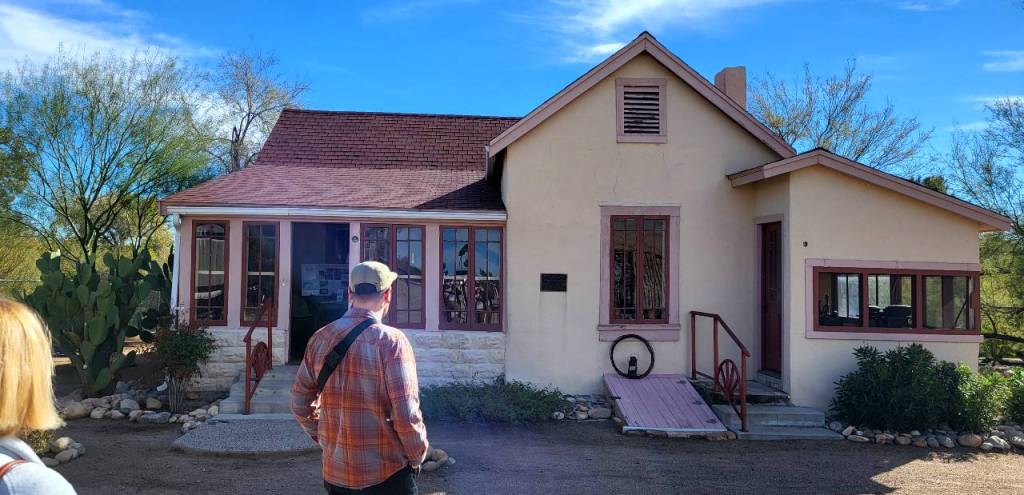
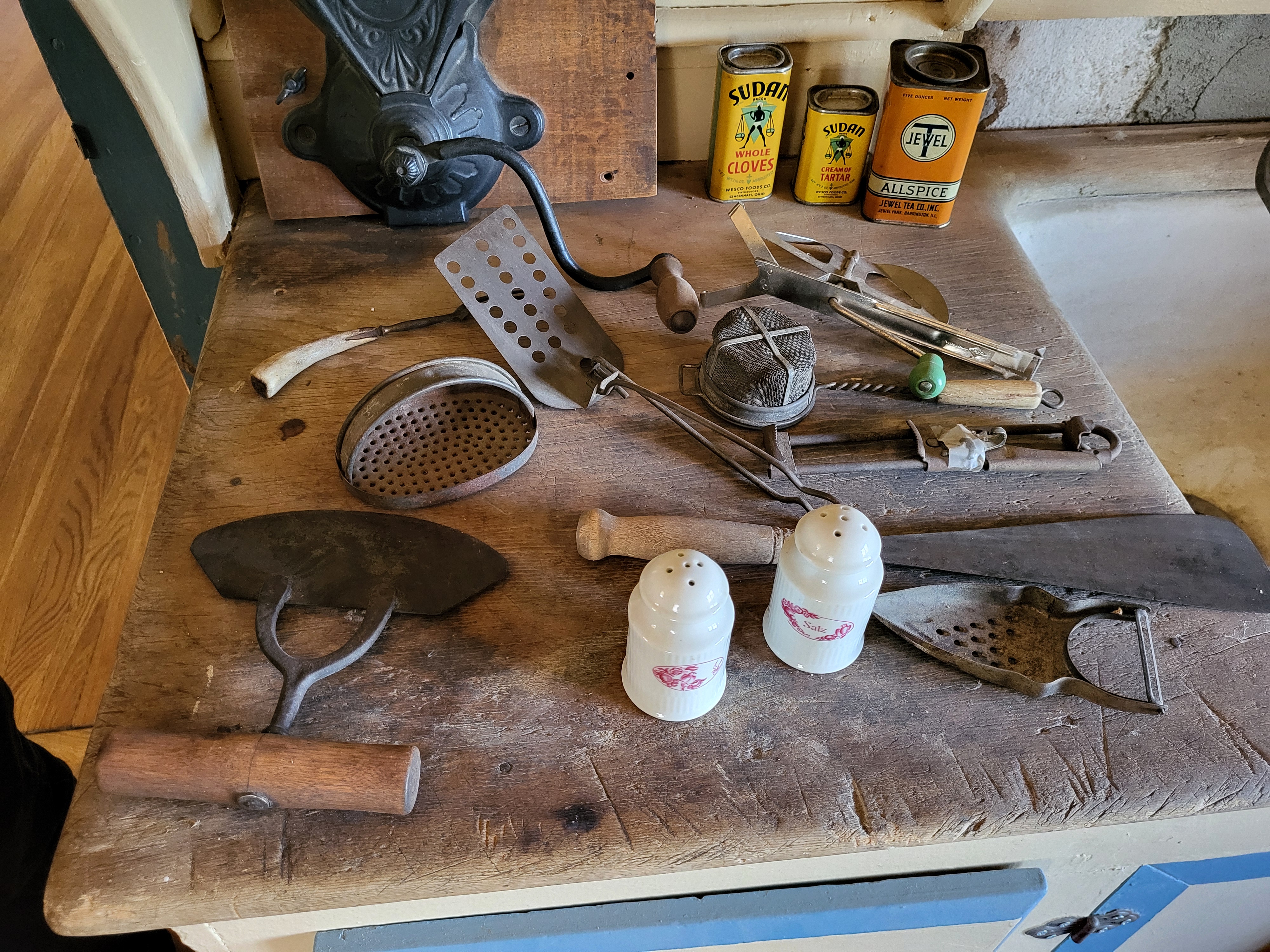
So that leads us to the house! You can book a tour by donation with the Wickenburg Historical Preservation Society, which owns and upkeeps the property by emailing or calling them, and we really appreciated being able to get into see the house over the Christmas break! The house was constructed in 1903 from adobe bricks, using native materials and knowledge construct a building that remains cool in the Arizona summers. Even while we were there in the winter (which was warm for people who live in Nfld), it was several degrees cooler inside. The house had seen modifications in the past, expanding the kitchen and enclosing a porch to create a new front room. It also included a ‘sleeping porch’ for extra warm nights. One of our favourite features was the original cabinetry and countertop in the kitchen, worn on the surface from years of using it as a cutting board!

We were very interested to learn that Henry’s ‘house’ at the Vulture Mine, which is labelled as the building the behind the hanging tree, has no recorded evidence that he ever lived there. It is also unlikely that the tree out front was used for multiple hangings, or even any at all! It could have been a jail tree, like the one in Wickenburg itself, where prisoners were chained up before a physical jail was built, but there are no records to state any of that for sure. Rather, Cindy told us, it was more likely that Henry stayed in a large tent while at the Mine and lived in a house in town. His first home in what became the Town of Wickenburg was called the ‘tunnel house’, partially built into the side of a hill to keep cool and allow for food storage. You can read more about Henry’s life HERE on the Historical Preservation Society’s website.
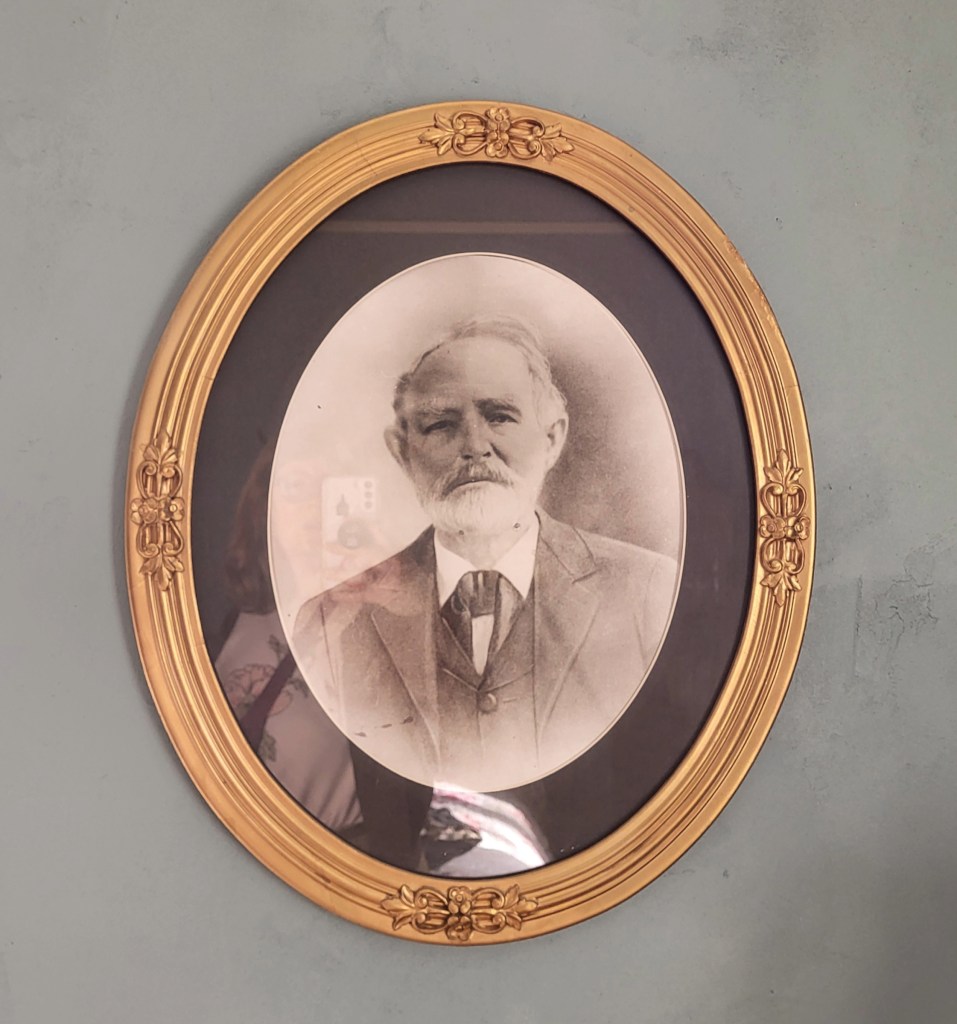
It was a cool experience to visit the house, even though Henry only lived in it for three years before his death, and to learn about some of the myths that surrounded the mine and Henry’s life. Cindy told us how Henry’s death, ruled as death by suicide, was questionable even at the time, and how a friend, Helene Holland, who inherited some of his property during his life, and the rest after death, may have been the one to pull the trigger. If you’re interested in that story, see the article HERE about a modern inquest into the case!
There you have it, the grave and final home of Henry Wickenburg! If you’re ever in the Wickenburg area, absolutely make time for a trip to the ghost town of Vulture Mine, and Wickenburg’s gravesite. It was a unique look into the mining and ranching history of the region, and a chance to see some very unique styles of graves. Thanks for reading!

 Spade & the Grave