
One of my ongoing research projects explored the practices of settlers who had to carry out burials during the winter months, when the ground was too frozen to dig into. One of the most interesting practices was to create purpose-built structures to house the bodies of the dead until the ground was thawed enough to dig the graves. These structures go by many names: dead houses, receiving tombs, mort houses, etc. and were often built right in or beside the burial grounds that they served. This practices was also used in the UK to protect the dead from body snatching, and in cities like Toronto or Montreal, they may have also served this purpose in Canada!
This page is a database of Canadian dead houses, and will be updated regularly, as this research is ongoing. Stay tuned, and please get in touch if you know about a dead house that isn’t on my list, octagonal or not!
Octagonal Dead Houses – Ontario
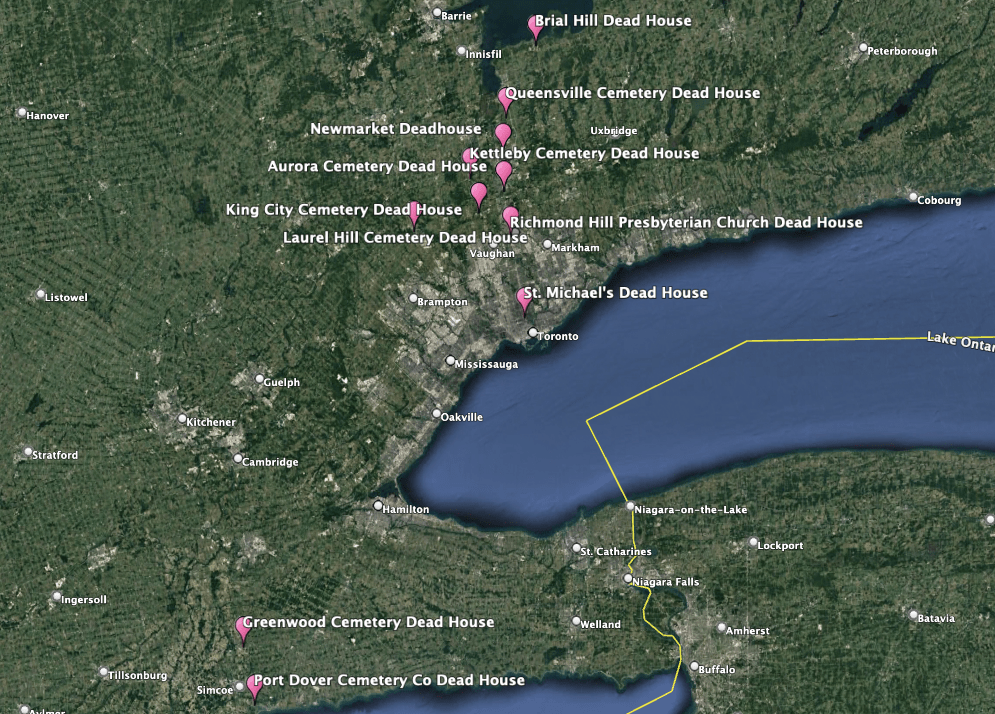
A unique architectural feature in Ontario, octagonal (8-sided) dead houses were build across southwestern Ontario throughout the mid-late 19th century. Most of these structures have since been turned into tool storage sheds, and we are finding the locations of more and more every day. While earlier documentation stated that only 4-5 survive today, so far I’ve identified 11 examples with the help of friends and colleagues.
- St. Michael’s Dead House, Toronto. 1855 (architect Joseph Sheard)
- Richmond Hill Presbyterian Church Cemetery Dead House. 1863 (architect Thomas Harris from Aurora)
- Aurora Cemetery Dead House, Aurora. 1868 (architect H. Harris)
- Newmarket Cemetery Dead House, Newmarket. 1870-71 (architect John T. Stokes, demolished between 1936-1940)
- King City Cemetery Dead House, King City. 1887 (architect William J. Irwin)
- Queensville Cemetery Dead House, Queensville. (date unknown)
- Laurel Hill Cemetery Dead House, Bolton. 1894
- Kettleby Cemetery Dead House, Kettleby. 1899
- Greenwood Cemetery Dead House, Waterford. (date unknown)
- Briar Hill Cemetery Dead House, Georgina. 1914
- Port Dover Cemetery Company Dead House, Port Dover (date unknown)
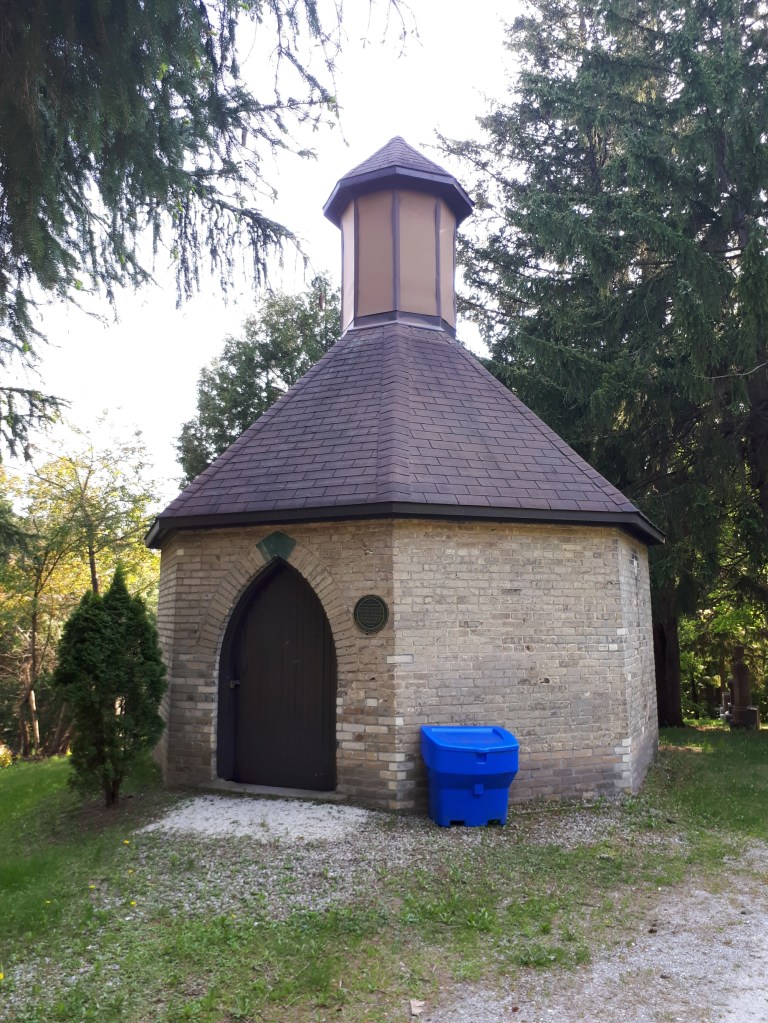
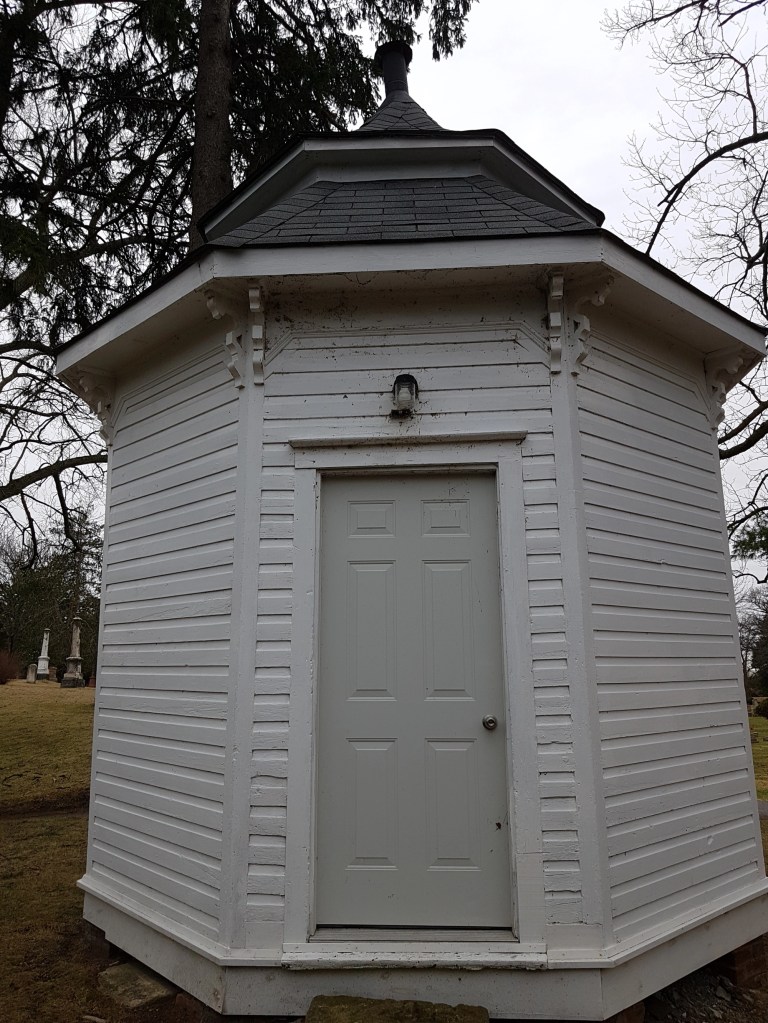
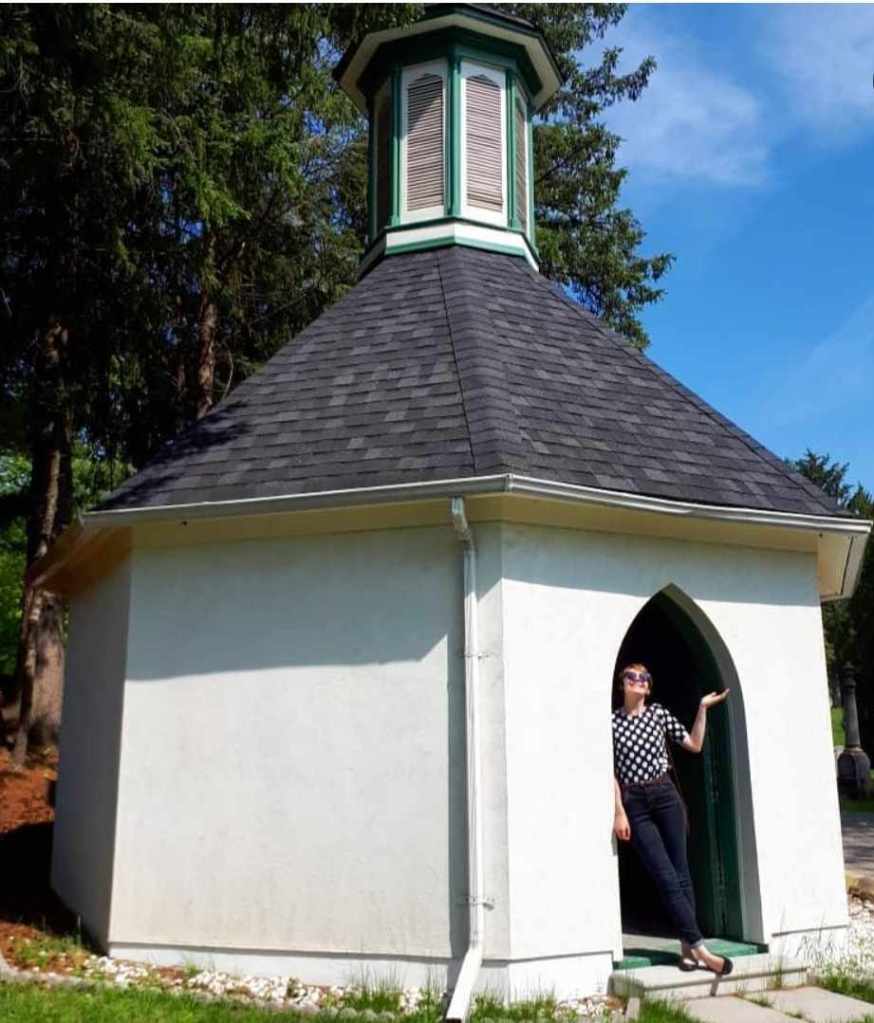
You can find more information on these buildings in my blog posts & articles about them:
- Winter Corpses: What do do with Dead Bodies in Colonial Canada (2018)
- Catalogue of Octagonal Dead Houses: 5th-7th Structures Identified (2019)
- Catalogue of Octagonal Dead Houses: 8th Structure Identified (2019)
- An Explanation for Octagonal Dead Houses (2019)
- Lacy, Robyn S. 2021. An Inconvenient Corpse: Settler Adaptation to Winter Death and Burial through Structural and Oral History. Northeast Historical Archaeology 50: Peripheral Spaces in Historical Places: Insights from Archaeology in the North Atlantic: 113-124.
Other Ontario Dead Houses
Octagonal structures aren’t the only ones that saw use as winter body storage in the 19th and into the 20th centuries in the province! Dead houses can come in many shapes and sizes, including reflecting popular architecture such as centre gable Gothic Revival (regionally known as the Ontario Cottage).
- St. Joachim Dead House, St Joachim. (contemporary structure)
- Mountain Mennonite Cemetery Dead House, Campden
- Merrickville Union Cemetery Dead House, Merrickville (still in use)
- Blue Church Dead House, at the Blue Church near Maitland
- Oakland Cemetery Dead House, Brockville (1940s)
- Yonge Mills Road Dead House, Yonge Mills
- Trevelyan Dead House, near Junetown, at 55 Catholic Church Rd (ruins)
- St Brendan’s Catholic Cemetery Dead House, Rockport
- Lansdowne Dead House, SW of Lansdowne
- Willowbank Dead House, Willowbank, SW of Gananoque (still in use)
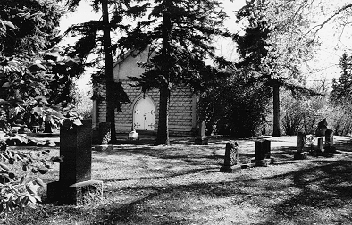
Newfoundland & Labrador Dead Houses
- Cornerbrook Dead House, Cornerbrook (contemporary structure)
- Hopedale Moravian Dead House, Hopedale, Labrador
- Nain Moravian Dead House, Nain, Labrador
Alberta Dead Houses
- Union Cemetery Chapel, Calgary (1908/09)
 Spade & the Grave